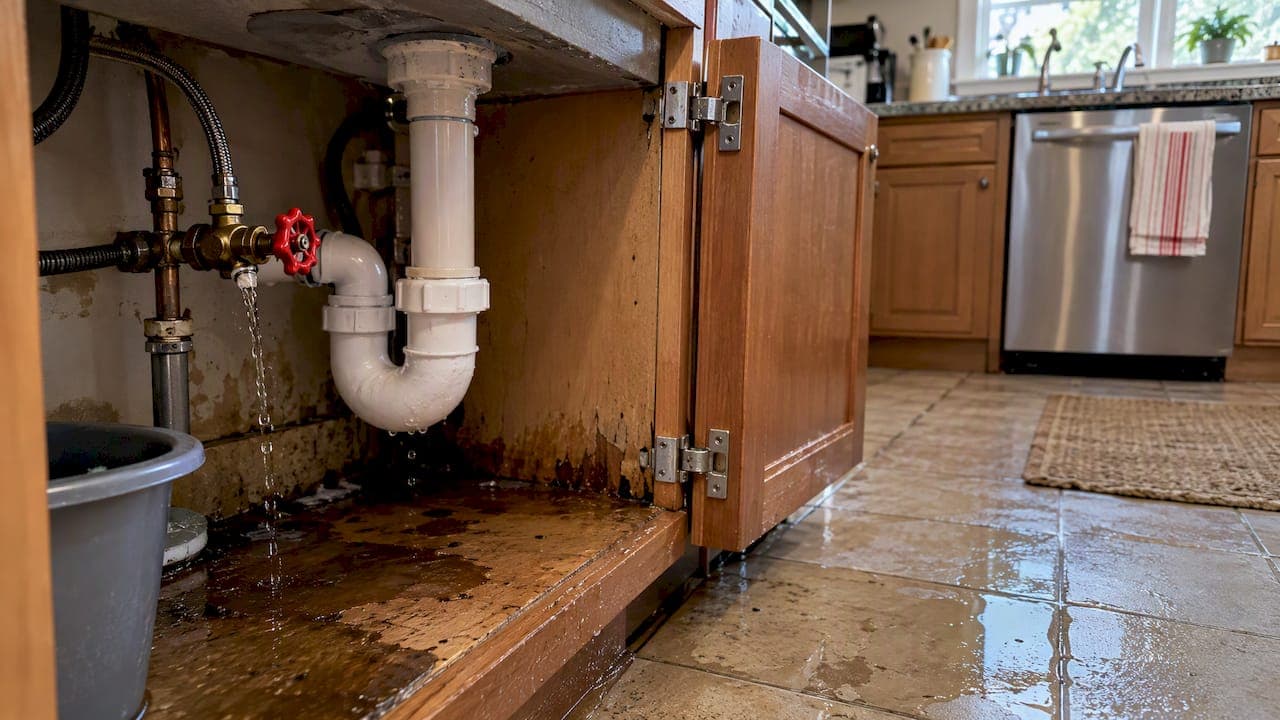

The three most urgent actions are to stay safe, stop the water, and document the damage, and then call for help. Check for electrical hazards and structural risk before you do anything else. Shut off your main water valve the moment it’s safe to move. Photograph and film everything before you touch a single item, then call a licensed plumber and your insurance company.
TL;DR:
- Dry wet materials within 24 to 48 hours, keep indoor humidity below 60%, and remove soaked carpet padding before it traps moisture.
- Avoid fans and do it yourself extraction if sewage or floodwater may have contaminated the area; professionals should check for hidden moisture in walls, flooring, and subfloors.
- Standard homeowners policies commonly cover accidental plumbing discharge, but flood and sewer backup require separate coverage, while policy wording and maintenance history can affect claims.
- Hire a restoration company if water reaches drywall, subfloor, or insulation, and delay demolition until you document damage and ask your insurer about authorized mitigation.
Table of Contents
- How to recognize a burst pipe
- A step-by-step checklist for the first minutes and hours
- What to do about extraction, drying, and mold prevention
- How homeowners insurance commonly treats burst-pipe water damage
- Clear criteria for hiring a plumber, a restoration company, or emergency services
- Reducing the risk of future pipe bursts
- Author credentials and our approach to burst-pipe restoration
- A homeowner’s view on timelines, costs, and restoration choices
- Ready 2 Inspect: owner led restoration and how to request help
- FAQ
- Sources
How to recognize a burst pipe
A burst pipe doesn’t always announce itself with a flood. Some signs are obvious. Others build quietly for days before the damage shows.
- Standing water, wet flooring, or fresh stains spreading across a ceiling or wall
- A sudden drop in water pressure, or a fixture that produces no water at all
- Hissing, rushing, or banging sounds coming from inside a wall or under a floor
- An unexplained spike in your water bill or a musty smell that wasn’t there before
The quiet signals matter as much as the dramatic ones. A pipe can burst inside a wall or under a slab and leak for days before you see a stain, and by then water has already soaked insulation, subfloor, or framing you can’t see. If your water bill jumps with no change in usage, treat it as a leak until proven otherwise.
A step-by-step checklist for the first minutes and hours
Once you spot a burst pipe, sequence matters. Doing things out of order wastes time or puts you at risk.
- Check for danger first. Look for exposed wiring, sagging ceilings, or the smell of gas. Evacuate if anything feels unstable and call emergency services if you suspect a gas leak or structural collapse.
- Find your main water shut off valve and close it. If you know the location of a local valve feeding the affected fixture, close that too.
- Cut power to any flooded area if you can reach the breaker safely without stepping in water. If you’re unsure, leave it to an electrician.
- Photograph and film the damage from multiple angles before you move anything, including close-ups of stains, standing water, and damaged belongings. FEMA recommends documenting interiors, exteriors, and damaged items by room before cleanup begins.
- Move undamaged valuables out of the water and begin limited extraction with towels or a wet vac only once you’ve confirmed it’s safe.
- Call a licensed plumber to stop the source. Call emergency services only if there’s immediate danger to life or property, such as fire risk or structural failure.
Pro Tip: Keep a folder, physical or digital, where every photo, receipt, and call log from the incident lives in one place. It saves hours when you’re filing a claim later.
What to do about extraction, drying, and mold prevention
Timing drives everything once the water stops moving. The EPA recommends drying wet or damp materials within 24 to 48 hours to limit mold growth, and that window shrinks fast once carpet, padding, or drywall stays saturated.
Within 24 to 48 hours, wet materials need to be dry or mold growth becomes likely. That’s the EPA’s own benchmark, and it’s the number every restoration decision should be measured against.
For clean water incidents, a few actions are reasonable to handle yourself:
- Extract standing water with a wet vac as soon as it’s safe
- Run fans and a dehumidifier to bring indoor humidity below 60%, ideally between 30% and 50%
- Open doors and windows if outdoor humidity is lower than indoor humidity
- Pull up soaked carpet padding, since it rarely dries fast enough to save
Skip the fans if there’s any chance the water is contaminated, meaning sewage backup or floodwater. Moving air across contaminated water spreads bacteria and spores through the house instead of containing them. Hidden moisture inside wall cavities, under flooring, or in subfloors often needs a professional with a moisture meter to find what you can’t see, because a surface that looks dry can still be holding water underneath.
How homeowners insurance commonly treats burst-pipe water damage
Most standard homeowners policies draw a sharp line between sudden plumbing failures and water that comes from outside the house. Triple-I notes that accidental discharge from a plumbing system is commonly covered under a standard HO-3 policy, though the exact wording of your policy, your maintenance history, and any endorsements can all affect the outcome. Flood damage and sewer backup are typically excluded unless you’ve purchased separate coverage for them.
A few habits protect your claim regardless of what your policy says:
- Report the loss to your insurer as soon as you’ve handled safety and the water source
- Photograph every room before cleanup and keep all receipts tied to mitigation
- Ask your adjuster which mitigation steps they’ll authorize before you pay for them
- Hold off on major demolition until you’ve documented the damage and notified your insurer
Calling the event by its accurate cause, accidental plumbing discharge rather than a general “flood,” also matters, since the label you use when reporting can shape how the claim gets evaluated.
Clear criteria for hiring a plumber, a restoration company, or emergency services
Different problems need different specialists, and calling the wrong one first costs time.
- Call a plumber immediately to stop the leak and repair or replace the failed section of pipe
- Bring in a restoration company when water has soaked into drywall, subfloor, or insulation, or when contamination or mold risk is present
- Treat a sagging ceiling, moisture found inside wall cavities, contaminated water, or any HVAC or electrical system that’s been submerged as red flags that require professionals, not a DIY fix
- Ask any restoration contractor you’re considering about their license, how they handle insurance paperwork, their containment procedures for contaminated water, and how they verify a space is actually dry before closing it up
A contractor who can’t answer that last question plainly hasn’t done this enough times.
Reducing the risk of future pipe bursts
Most burst pipes are preventable with a handful of habits maintained year round.
- Insulate exposed pipes in attics, crawl spaces, and exterior walls, and keep indoor temperatures steady during cold spells
- Monitor water pressure and have a plumber check for corrosion or aging joints during routine inspections
- Drain outdoor hose bibs and irrigation lines before winter, and test your main shut off valve now so you’re not fumbling with it during an emergency
Pro Tip: Test your main shut off valve once a year, even when nothing’s wrong. A valve that’s corroded shut is useless exactly when you need it most.
Author credentials and our approach to burst-pipe restoration
The author holds Florida licenses as both a mold assessor and a mold remediator, along with InterNACHI certification. They previously worked as a Florida home inspector for close to a decade, gaining extensive experience with water damaged homes.
The work covers assessment, remediation, reconstruction, and insurance claim support by a licensed team that manages the entire process. The owner comes out to every job. Nothing is removed from your home until payment terms and likely insurance outcomes are clearly communicated.

A homeowner’s view on timelines, costs, and restoration choices
A typical burst pipe recovery runs from mitigation and drying through repairs and final rebuild, and the full sequence takes longer than most homeowners expect going in. Costs swing widely based on how much was soaked and for how long, which is exactly why a single team handling mitigation through reconstruction cuts down on the coordination burden of juggling separate contractors. Get every estimate in writing, and confirm licensing before anyone touches your walls.
— John Foutz
Ready 2 Inspect: owner led restoration and how to request help
When a pipe bursts, you don’t need five different companies and five different stories about who’s responsible for what. We handle licensed assessment, mold remediation, water damage restoration, reconstruction, and the insurance claim itself, start to finish, as one team.

You deal directly with me. I answer the phone, I come out to look at the damage myself, and nothing comes out of your house until you’ve seen the cash price and understand exactly what your insurance is likely to cover. That sequence protects you before any demolition starts, not after.
- Request water damage restoration if water has already soaked into flooring, drywall, or framing
- Schedule a free mold inspection if it’s been more than 48 hours since the leak and you’re worried about mold
- Browse our full restoration services to see how assessment, remediation, and rebuild work together under one roof
Once your walls are open, a plaster and drywall specialist’s guide to repairing water damaged walls is a useful reference for understanding what the rebuild phase actually involves.
FAQ
Will insurance cover water damage from a burst pipe?
Often yes. Triple-I explains that accidental discharge from a plumbing system is commonly covered under a standard HO-3 homeowners policy, though your specific wording, maintenance history, and endorsements affect the outcome. Flood and sewer backup are typically excluded unless you’ve added separate coverage.
What should I do immediately after a pipe bursts?
Check for electrical and structural hazards first, then shut off your main water valve as soon as it’s safe to reach it. FEMA advises documenting the damage with photos and video before you move or discard anything, then call a licensed plumber and your insurer.
How much does it cost if a pipe bursts in your house?
Cost depends heavily on how much water spread, how long it sat, and which materials got soaked, so there’s no single figure that applies to every situation. Ask any restoration contractor for a written estimate before work begins, and confirm with your insurer which mitigation steps they’ll authorize and pay for.
When should I start worrying about pipes bursting?
Watch for a sudden drop in water pressure, hissing or banging sounds inside walls, an unexplained jump in your water bill, or musty smells with no visible source. Those signs often show up before a pipe fully fails, and catching them early can mean a repair instead of a flood.
Sources
- Brief guide to mold, moisture, and your home | US EPA
- Water damage: what’s covered, what’s not | Triple-I
- Don’t wait to clean or make repairs | FEMA