UsuallyHow it usually goes
- The crew starts tearing out walls the day they arrive.
- A lien goes on your house from day one.
- The claim gets filed after your home is already torn open.
- If the insurer denies it, you are left with the damage and the bill.
Seminole County · About 10 minutes south
The same licensed owner you deal with is the one who shows up. We cover Longwood from our Lake Mary base.
Ready 2 Inspect serves Longwood, Seminole County, from our base in Lake Mary (about 10 minutes south). John Foutz is a Florida licensed mold assessor and remediator, and the same person who answers your call is the one who comes out to help.
What we do in Longwood
Mold remediation in Longwood
A licensed assessor confirms what you are dealing with and where the water is coming from.
Containment sheeting and negative air keep spores from spreading to the rest of the house while we work.
Affected drywall, baseboard, and materials come out and are disposed of properly, not painted over.
The leak or humidity source gets fixed, because the mold comes back if it does not.
Post-remediation verification confirms the job is done, then we rebuild what came out.
Where a formal assessment and written protocol are involved, Florida law (section 468.8419) keeps that assessment, and the check against it, independent of the company doing the removal. How mold remediation works.
Longwood at a glance
Local knowledge
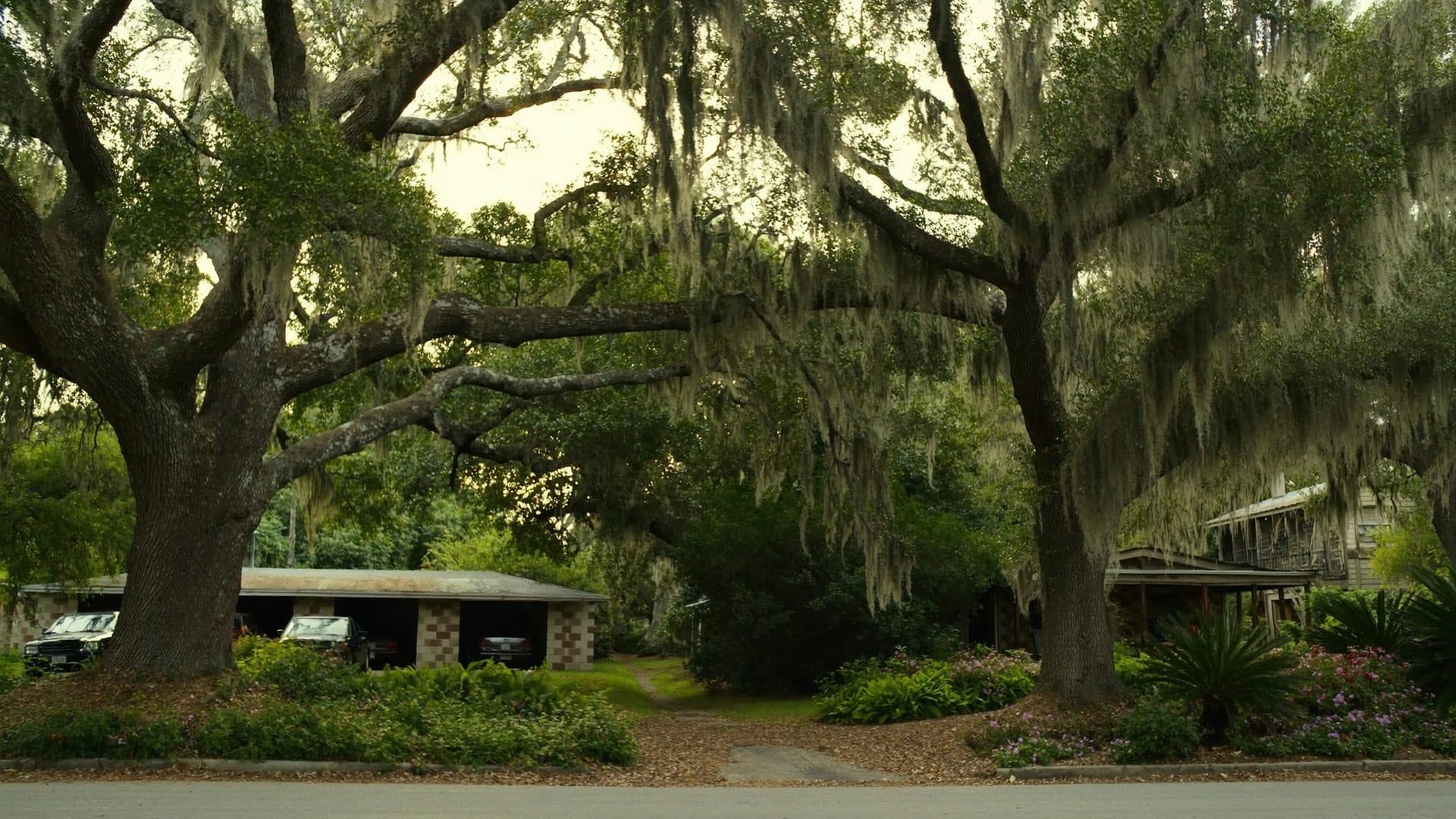
Longwood is older than most of its houses. Homesteaders were settling here by 1873 and the railroad came through in 1880, but the City's own history says Longwood developed into a mostly residential community during Central Florida's growth in the 1970s and 1980s, and the Census agrees: more than half of today's homes date from those two decades. The established neighborhoods sit under a heavy live-oak canopy on mature lots. The shade is part of the appeal, and it also keeps roofs and north-facing walls wet for longer after rain. That slow drying is one reason these homes see exterior mold and roof leaks.
One volunteer rain gauge, 2.8 miles northwest of Longwood, logged 13.21 inches in Hurricane Ian in 2022 and 10.07 inches in Milton two years later. Rain like that finds any weak spot in an older roof. Under a canopy this heavy, a storm can also drop a limb that opens the roof, and water can soak the attic insulation for days before a stain shows on the ceiling below.
Longwood homes by age
The housing
The median Longwood home was built in 1983, five years older than the median for Seminole County as a whole. The 1970s were the biggest decade by a wide margin, with 31 percent of the homes standing today, and the 1980s added another 23 percent. That is the growth the City's history describes: the space industry and Walt Disney World brought new development to the area in the 1960s and 1970s, and through the 1970s and 1980s Longwood filled in as a mostly residential town.
The town itself is far older. By 1886 it had about 1,000 people, and after the freezes of 1894 and 1895 it had fallen to 325 by 1900. The Census estimates almost no homes still standing from before 1950. Newer building is a real share too: about one home in five went up in 2010 or later, and about one in eight is an attached single-family home such as a townhouse. In an attached home a leak can cross a shared wall, so the first job is finding which side it started on, before anything comes out.
Longwood's lakes and septic
Lakes and septic
Longwood has several small private lakes. The Seminole County Water Atlas places Fairy Lake (50 acres), Lake Wildmere (32 acres, about 6 feet deep on average) and Lake Ruth (11 acres) in Longwood. Fairy Lake and Lake Wildmere sit in the Gee Creek watershed and Lake Ruth in the Soldiers Creek watershed. Fairy Lake goes back to the start: according to the City's history, when E.W. Henck arrived in 1873 the Hartley family was already homesteading there, on ground that is now the Columbus Harbor neighborhood.
Many Longwood homes were built on septic tanks. In 2017 the state awarded the city more than $2 million to connect more than 350 properties to sewer, to cut the nutrients reaching Lake Ruth, Lake Wildmere, Fairy Lake and ultimately Lake Jesup, and the City has carried on with further phases since. If your home is still on a tank, a septic system can back up into the house when days of heavy rain have saturated the ground. Sewage in the house counts as contaminated water, so anything porous it wets, like carpet, pad and drywall, is cut out and replaced instead of being dried and left.
Sources, checked September 2026
Nearby
The insurance question
Most companies open your house up first and hand you a bill if the claim gets denied. We do it backwards on purpose. One licensed company cleans up, rebuilds, and deals with the adjuster for you.
“Being this careful has cost us work. I am fine with that.”
Local questions
Mostly shade. Under the live oaks, roofs and north-facing walls stay wet long after a storm passes, and a surface that never fully dries is where mold and mildew grow. When it shows up around windows, fascia or the roof edge, it is worth checking whether water is also getting in behind it. Our free inspection includes moisture readings, which show whether anything behind the growth is wet.
Yes. Many homes here have roofs at or past their expected life, and a limb from the canopy can open one up in a storm. We find where the water went, dry or remove what it reached, and rebuild.
A septic backup is dirty water, so it is handled as contaminated. Carpet and pad it soaked, and drywall it wicked into, come out for good; nothing porous is dried and reused. The slab and the wall framing it touched are cleaned and dried out before the rebuild. The City has been moving neighborhoods from septic to sewer in phases, so ask the City if your street is on its list.
It starts with our free inspection, which is not a mold test: our licensed mold assessor goes through the rooms that worry you, reads moisture in walls and floors, scans them with thermal imaging and takes no samples. If the readings point that way, air or surface samples can go to a lab as a separate, optional step, priced for you before any are collected. Where the work involves a formal mold assessment, Florida's mold law keeps the assessor independent of the company doing the removal.
We do. Roughly one Longwood home in eight is an attached single-family home such as a townhouse. When water crosses a shared wall or comes from next door, we trace it to its source and take moisture readings on your side to show how far it has spread.
Longwood sits roughly ten minutes south of us in Lake Mary. Call us, and you will hear an honest arrival time before the call ends.
Water or fire emergency, or a musty smell you cannot place. Either way, the person who answers is the person who does the work.
MRSA4802 · MRSR4767