Category 3 Water Damage: What It Is and What to Do

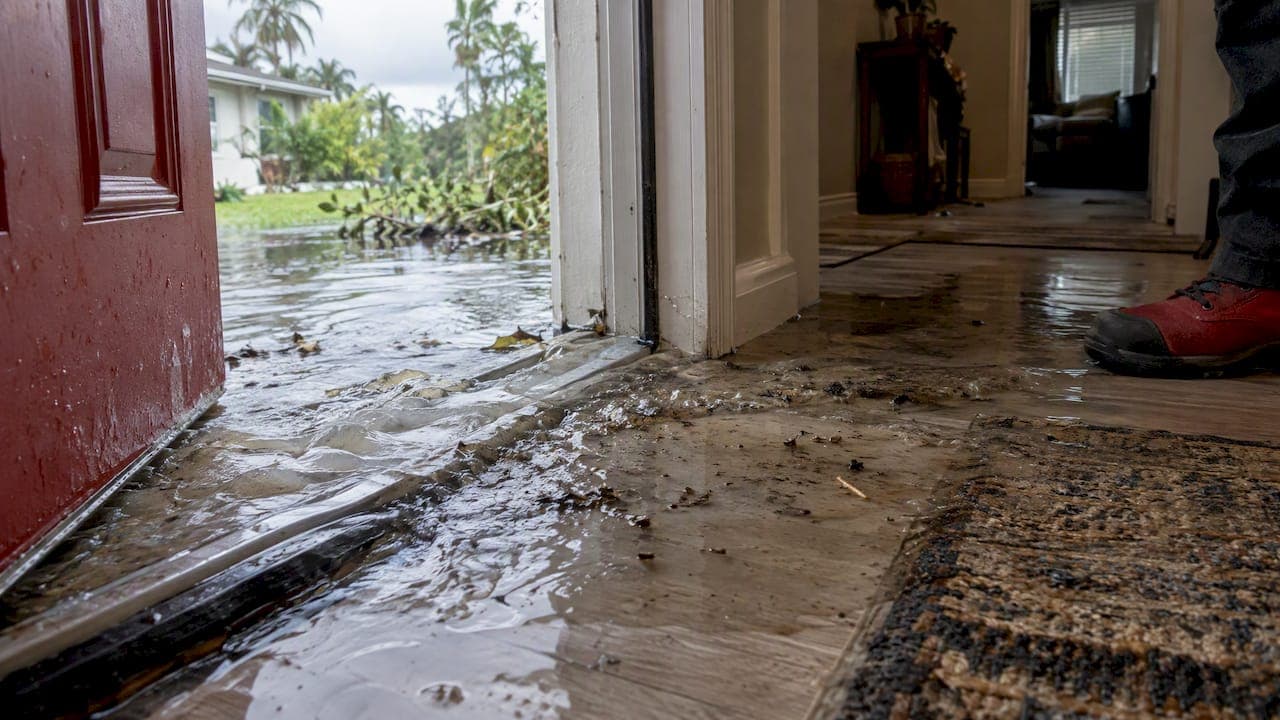
Category 3 water damage is water that is grossly contaminated and can carry harmful bacteria, viruses and other agents. Sewage backups and rising river or storm water are the classic causes. The label is about what is in the water, not how much of it there is, and it changes what can stay in your house: porous materials that touched it usually have to go, and the cleanup should be done by a licensed professional, not by you with a mop.
I’m John Foutz, owner of Ready 2 Inspect Mold Services in Lake Mary. Below is how the category works, how to tell Category 2 from Category 3, what to do in the first hours, and what to expect from insurance before anyone tears out a wall.
TL;DR
- Category 3 (“black water”) is grossly contaminated water: sewage, toilet backflow from beyond the trap, rising flood water. It can look perfectly clear.
- Category 2 water left sitting can be reclassified as Category 3, so waiting makes the job bigger and riskier.
- Wet porous materials (drywall, carpet, padding, insulation) usually get removed. Hard, non-porous surfaces can often be cleaned and kept.
- Standard homeowners policies often exclude flood and sewer backup unless you bought an endorsement or separate flood coverage, so check your policy early.
- Do not clean it up yourself. Call a licensed company, and ask for the cost and the insurance outcomes in writing before demolition starts.
Table of Contents
- What Category 3 water damage actually means
- “Black water” is a nickname, not a color test
- Category 2 vs. Category 3: where the line is
- Common causes in Central Florida homes
- What to do in the first hours
- What gets removed and what can be saved
- Why drying fast matters even after the contamination is handled
- Does insurance cover Category 3 water damage?
- Our perspective: sequence before speed
- When we come out for a water loss
- Choosing a company for a Category 3 job
- FAQ
- Sources
What Category 3 water damage actually means
The restoration industry sorts water losses using the ANSI/IICRC S500 standard. It uses three categories for the water’s contamination level, and separate “classes” for how much material got wet. Category 3 is the top of the contamination scale. The IICRC S500 describes it as the most serious of the three categories, and the working definition is water that is grossly contaminated and can contain pathogenic, toxigenic or other harmful agents.
The three categories in plain terms:
| Category | Common name | Typical sources | What it means for your home |
|---|---|---|---|
| 1 | Clean water | Broken supply line, overflowing sink with clean water, rainwater from a failed pipe | Low risk at first, but it degrades if left wet |
| 2 | Gray water | Dishwasher or washing machine discharge, toilet overflow with urine but no feces, sump pump failure | Significant contamination; some materials can be dried, others removed |
| 3 | Black water | Sewage, toilet backflow from beyond the trap, rising water from rivers or streams, seawater | Gross contamination; porous materials generally removed, strict safety protocols |
The examples in the Category 2 row follow the list in a university water damage guideline built on the same standard, which also lists sewage-mixed water and rising stream or river water under Category 3.
“Black water” is a nickname, not a color test
People hear “black water” and picture something dark and foul. That picture causes mistakes. Category 3 water can look completely clear. Restorers do not judge it by appearance. They judge it by where it came from and what it could have picked up on the way.
A toilet that backs up from the drain line side is Category 3 even if the water in the bathroom looks like tap water. A flooded yard that pushes water in under a door is treated as contaminated, because ground-level flood water crosses lawns, septic systems and roads before it reaches you.
Category 2 vs. Category 3: where the line is
This is the question I get most from homeowners who have been told two different things by two different people. Three points settle most of it.
The source decides the starting category. Water from a dishwasher hose or a washing machine line is Category 2. Water that came up out of a sewer line, or in from outside as flood water, is Category 3.
Time can move water up a category. Category 2 water that is not removed promptly can be reclassified as Category 3 after roughly 48 to 72 hours. In Central Florida heat and humidity, I treat that window as a ceiling, not a target. Warm, wet cavities get ugly quickly.
Not every storm leak is Category 3. The S500 consensus body issued a position statement in March 2026 saying that top-down water entry and wind-driven rain are not automatically Category 3. A restorer should evaluate the actual site and look for real contamination. If there is doubt, the statement points to site assessment, and sampling with laboratory analysis can be used to verify it.

That last point matters to your wallet. Category 3 procedures cost more. An honest company does not call every wet ceiling black water, and it does not call a sewage backup “just gray” to make a quote look small. If you are told your loss is Category 3, ask what the contamination evidence is.
Common causes in Central Florida homes
These are the situations that most often produce Category 3 conditions here:
- Sewer or septic backup. A clogged main line, a failed septic drain field or a heavy-rain overload pushes sewage out of the lowest drain, usually a tub, shower or floor drain.
- Toilet overflow from beyond the trap. If the waste came up from the drain line and not just from the bowl, treat it as Category 3.
- Hurricane and tropical storm flooding. Rising water from outside, seawater and overflowing retention ponds all qualify.
- Category 2 left too long. A washing machine overflow that sat under flooring for several days can end up here.
Roof and soffit leaks are a different story. They are usually clean or lightly contaminated rain, but if they soak insulation and sit, they become a mold problem. A moisture source above the house is worth fixing first, and this guide on mold on soffits and fixing moisture first explains why cleaning without correcting the leak or ventilation gap brings the growth back.
What to do in the first hours
Safety comes before salvage. The CDC’s cleanup guidance says flood water can contain dangerous bacteria from overflowing sewage and agricultural and industrial waste, and the EPA’s flood guidance likewise says to avoid contact with flood water because of raw sewage and other hazardous substances.
- Stop the source if you safely can. Shut off the water at the main for a supply failure. For a sewer backup, stop using every drain, toilet and washing machine in the house.
- Keep people and pets out. Children, pets, anyone with a weakened immune system or open cuts should stay away from the affected area.
- Turn off power to wet areas if it is safe to reach the panel. If water is near outlets or the panel, do not go in. Call your utility or an electrician. The CDC notes standing water can harbor dangerous bacteria or live electrical current.
- Do not run the AC or fans through the contaminated area. Air handlers can spread contamination and moisture through the house.
- Photograph everything before anything is moved: the source, the water line on walls, damaged belongings, the date and time.
- Call a licensed restoration company. Ask them to confirm the category, give you a written scope, and explain what happens if insurance does not pay.
What I do not recommend: wet vacuuming sewage, bleaching walls and calling it done, or leaving it “to dry on its own.” The CDC and EPA both advise against homeowners attempting a do-it-yourself cleanup of this kind of water, because the job is about controlling pathogens as much as removing water.
What gets removed and what can be saved
The rule is simple: porous materials hold contamination, and non-porous ones do not.
Usually removed and discarded:
- Drywall and insulation that wicked up the water
- Carpet and carpet padding
- Particle board and similar cabinet bases
- Mattresses, upholstered furniture, paper and cloth items
The CDC and EPA guidance says materials made of paper, cloth, wood or other porous substances that stay wet with flood water or sewage for 24 to 48 hours should typically be discarded, because they remain a source of mold and microbial growth.
Often cleaned and kept:
- Tile, glass, metal and hard plastic
- Sealed solid surfaces
- Framing, which can usually be cleaned and dried, then verified before closing
Non-porous surfaces still need proper cleaning: scrubbing with detergent, then a disinfectant step. The CDC cleanup page gives a household bleach solution of 1 cup per 5 gallons of water, unscented, for disinfecting. For sewage in your living space, I would still hand that work to a professional.
Flooring is where I see the most confusion. If contaminated water has gone under a finished floor, the finish floor generally has to come up so the substrate can be evaluated and dried. Slab, subfloor and wall bottoms all need a look. That is demolition, and it is also the point where a homeowner needs to know who is paying.

Why drying fast matters even after the contamination is handled
Contamination control is one half of the job. The other half is moisture. The EPA advises removing and drying wet materials within 24 to 48 hours to prevent mold. In a Central Florida house, a wet wall cavity that stays closed becomes a mold job quickly, and then you have two problems on one claim.
Signs that moisture is still hiding:
- A musty smell that returns after cleanup
- Baseboards that swell, cup or separate
- Paint that bubbles or stains that reappear
- New or worsening respiratory symptoms in the household
The CDC’s reentry guidance treats musty odors and worsening asthma after a water event as signs that mold or microbial growth may already be present. We do not diagnose health conditions. If someone in the home has symptoms, they should talk to their physician, and the house should be checked for moisture. Our free mold inspection and air sampling can tell you whether growth is present.
Does insurance cover Category 3 water damage?
It depends on the cause and on your policy, and this is where people get hurt financially. I cannot read your policy for you in an article, but here is the general picture, with the sources.
- Flood is usually excluded. FEMA notes that most standard homeowners policies do not cover flooding or damage from surface water. That takes in rising water from storms.
- Sewer backup is often an add-on. Coverage for a backup typically comes through a specific endorsement, or as a result of a flood if you carry flood insurance. A backup caused by something unrelated to flood, such as a clogged pipe, is generally not covered by a flood policy.
- Policies differ. FEMA’s home insurance matrix shows that flood, sewer backup and other riders are separate lines from the base homeowners coverage.
What to do before demolition:
- Read the declarations page and look for “water backup” or “sewer backup” and “flood.”
- Call your agent and ask the exact question: is this loss, from this source, covered, and what is the limit and deductible?
- Get the cash price for the work in writing, so you can compare it with the deductible and make a decision.
- Make the decision before the walls come apart, not after.
The common nightmare is a crew that rips everything out, files a claim, and then the claim is denied with the house already open. The homeowner owns the bill and a gutted room. That is why we work in a fixed order.
Our perspective: sequence before speed
Every restoration company in this market leads with how fast it can show up and how much equipment is on the truck. Speed matters, and we move quickly. But on a Category 3 loss, the order of decisions protects you more than the order of trucks.
Here is how we run it:
- I look at it myself. You deal directly with me. I answer the phone and come out. There is no call center, dispatcher or franchise queue.
- We confirm the category from the evidence. Source, conditions and, if there is real doubt, sampling. We do not assume the worst to inflate a job, and we do not downplay a sewage loss.
- The cash price goes on the table before the claim is filed. You see what the work costs if you pay out of pocket.
- We lay out every outcome, including the one where insurance pays nothing. If you are uninsured or paying cash, that is work we take, and we do not price it out of reach.
- Nothing comes out of the house until you have decided. You choose; then work starts.
- One licensed company does the cleanup, the rebuild and the claim. I hold Florida licenses as a mold assessor (MRSA4802) and a mold remediator (MRSR4767), I am InterNACHI certified (17122207), and I worked as a Florida home inspector for close to a decade before starting this company. Our license also covers reconstruction: drywall, tile, cabinets, counters, flooring and trim. The company that opens the wall is the one that closes it.
I hear it often from homeowners: they hired a big brand, the demolition got done, and then nobody finished the rebuild. If that is you, we can pick up the reconstruction under the same claim.
— John Foutz
When we come out for a water loss
If you are in Lake Mary, Seminole County or the surrounding counties we serve, our water damage restoration service covers extraction and structural drying, starting the same day when we can. If a wet cavity has already turned into growth, mold remediation is handled by the same licensed team, and rebuild work falls under our reconstruction services. For a fire, see our fire and smoke restoration.
We work in places like Lake Mary, Longwood, Winter Springs, Orlando and DeLand. To talk to me about a loss today, start at ready2inspect.com.
Choosing a company for a Category 3 job
Whoever you hire, ask these questions and expect specific answers:
- Who is the licensed person on this job, and will they be on site?
- How did you determine the category, and what would change it?
- What is the written price if I pay myself, before any claim is filed?
- What happens, and what do I owe, if insurance denies the claim?
- Who does the rebuild, and is it under the same license?
- How will you verify the structure is dry and clean before closing walls?
If the answer to any of these is a pause or a “we’ll sort that out later,” slow down. A restoration contract signed in a panic is the most expensive kind.
FAQ
What is Category 3 water?
Category 3 water is grossly contaminated water that can contain pathogenic, toxigenic or other harmful agents. Typical sources are sewage, toilet backflow from beyond the trap, and rising flood water. It can look clear, so the source decides the category, not the color.
What is the difference between black water and gray water?
Gray water (Category 2) is significantly contaminated but not grossly so, such as dishwasher or washing machine discharge. Black water (Category 3) comes from sewage or flood sources and carries a much higher health risk. Gray water left standing for about 48 to 72 hours can be reclassified as black water.
Is rain coming through the roof Category 3?
Not automatically. The S500 consensus body said in March 2026 that top-down water entry and wind-driven rain are not automatically Category 3. A restorer should evaluate the site for actual contamination, and sampling can verify it when there is doubt.
Can I clean Category 3 water myself?
The CDC and EPA advise avoiding contact with flood and sewage water and recommend professional help for this kind of contamination. Porous materials generally have to be removed, and the structure has to be cleaned and dried to prevent mold. Call a licensed company, and wear no shortcuts in the meantime: stay out of the area.
Does homeowners insurance cover sewage backup?
Often only with an endorsement, and flood damage usually needs separate flood insurance. Check your declarations page and ask your agent about your specific source of water before any demolition. We lay out the cash price and every insurance outcome first so you can decide with the facts.
Sources
- Category 3 Water Damage (Black Water), WRT Training
- ANSI/IICRC S500 Consensus Body position statement, March 16, 2026
- Water Damage Restoration Guideline, Northern Arizona University
- What Is Category 3 Water Damage?, Allied PA
- Guidelines for Cleaning Safely After a Disaster, CDC
- Reentering your flooded home, CDC
- Cleaning Up After a Flood: FAQs, EPA
- National Flood Insurance Program Fact Sheet, FEMA
- Home Insurance Matrix, FEMA