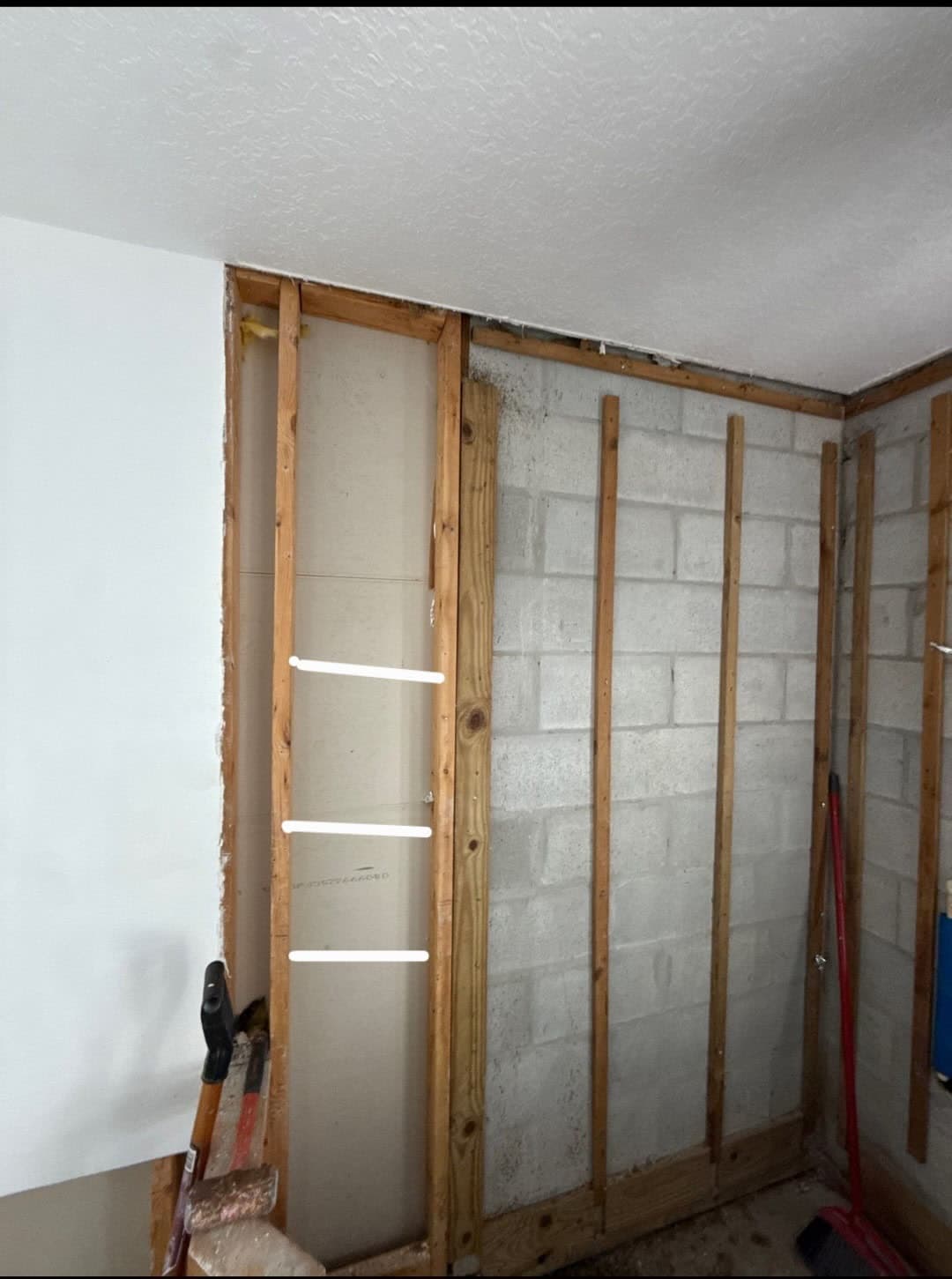
Encapsulation seals a surface with a coating. It is legitimate on a cleaned, dried, structurally sound surface where growth has already been removed. Sprayed over active mold on a wet substrate it does not solve the problem, because the moisture feeding the growth is still there and the growth returns through the coating.
What encapsulation actually is
Encapsulation means painting or spraying a sealant over a surface so that whatever is on it is locked underneath. It is a real product with real uses, and it does have a place in this trade.
That place is narrow. It comes at the end of a job, on a surface that has already been cleaned, already been dried, and already had the water source fixed. Used that way it is a finishing step on wood framing that cannot be replaced, and it is fine.
Why spraying over active growth does not fix it
Mold is not a stain. It is something living, and it is living because something is wet. Drywall that is holding moisture, a slow supply line behind tile, a roof leak tracking down a truss, condensation on a duct in a hot attic.
Seal a coating over that and none of it changes. The material underneath is still wet, so growth continues, and it comes back through or around the coating. What you have bought is a delay, and usually a delay that costs more later because the wet material has had longer to break down.
There is a second problem. A coating hides the evidence. The next person who looks at that wall, whether that is a buyer's inspector or the next contractor, cannot see what is behind it.
What a real mold removal scope contains
If someone is quoting you properly, their scope should name most of these. If it names none of them and the price is a single line, ask more questions.
- Containment. The work area sealed off with sheeting and a zippered entry, so cutting into a moldy wall does not move spores into rooms that were fine.
- Negative air and HEPA filtration, so air leaves the contained area through a filter rather than through your hallway.
- Removal of the affected material. Drywall, baseboard, carpet pad, insulation, whatever is holding it. Removed and bagged, not painted.
- Correcting the moisture. The leak, the humidity, the condensation. If this is missing from the scope, everything above it is temporary.
- Drying the structure to a measured moisture level rather than to the touch.
- Verification that the work is done, and a written record of it.
What to ask anyone who quotes you a spray only fix
You do not need to be an expert to ask these. You just need to ask them.
- Where is the water coming from, and what are you doing about that part?
- What are you removing, and what are you leaving in place?
- Are you building containment, and what happens to the air while you work?
- What moisture reading are you drying to, and how will I see it?
- What is your Florida license number for this work?
Is it ever the right call?
Yes. On framing that has been cleaned and dried, where the source is fixed and the wood is sound, a sealant is a reasonable last step and plenty of legitimate scopes include one.
The difference is not the product. It is whether it is the whole job or the last five percent of it.