Musty Smell in Your House: What It Means and What to Do

A musty smell in your house means something is damp that should not be. The US EPA says the odor comes from gases that molds release, and that a moldy smell suggests mold is growing and should be investigated. So the smell is not a cleaning problem. It is a moisture problem, and the fix is to find the wet spot, not to cover the odor.
If you cannot find the source after a careful look, or the smell showed up after a leak, a storm or an AC problem, have a licensed Florida mold assessor look at it. We offer a free mold inspection across Seminole, Orange, Volusia and Lake counties, and the person who comes out is the owner.
TL;DR
- A musty or earthy smell almost always points to moisture, and often to mold growing somewhere you cannot see.
- Common sources are leaking pipes, roof leaks, wet carpet or padding, a clogged AC drain line, and condensation on cold surfaces.
- Materials that stay wet for more than 24 to 48 hours can grow mold, so a smell after a leak is urgent.
- Air fresheners, sprays and candles do not fix it. Find and repair the water source first.
- Mold over 10 square feet, or a smell you cannot trace, is the point to call a licensed professional.
Table of Contents
- What a musty smell actually is
- Why a house in Central Florida smells musty
- Can a house smell musty without mold?
- How to trace the source yourself
- What not to do
- What you can handle yourself
- When the smell is a job for a licensed professional
- How to tell when the problem is actually solved
- Getting someone out this week
- FAQ
- Sources
What a musty smell actually is
Mold gives off gases as it grows and feeds. Those gases are what you smell: earthy, stale, damp, like a wet basement or old towels left in a bag. The NIH describes the same smell as musty, stale or damp, and notes that when a leak is behind a wall, the smell may be the only sign you get.
That last point matters for most homeowners reading this. You may walk the whole house and see nothing. No stain, no dark spot, no bubbling paint. The smell is still real information. It tells you that something is wet and has been wet long enough for growth to start.
Mold only becomes an indoor problem where there is water damage, prolonged high humidity or dampness. The University of Pennsylvania’s environmental health office says so plainly. Remove the moisture and the growth stops. Leave the moisture and the smell comes back, however much you clean.
Why a house in Central Florida smells musty
Florida homes give mold a lot to work with: heavy rain, long humid stretches, and air conditioning running most of the year. The moisture sources that the University of Pennsylvania factsheet lists all show up here:
- Roof leaks from damaged roofing or blocked gutters
- Storm-driven rain coming through window frames or exterior walls
- Leaking pipes and sewer backups
- Damp crawl spaces
- Condensation on cold surfaces
The Illinois Department of Public Health adds leaking windows and air conditioners, humidifiers, and dryers vented indoors to the list.
The smell after rain
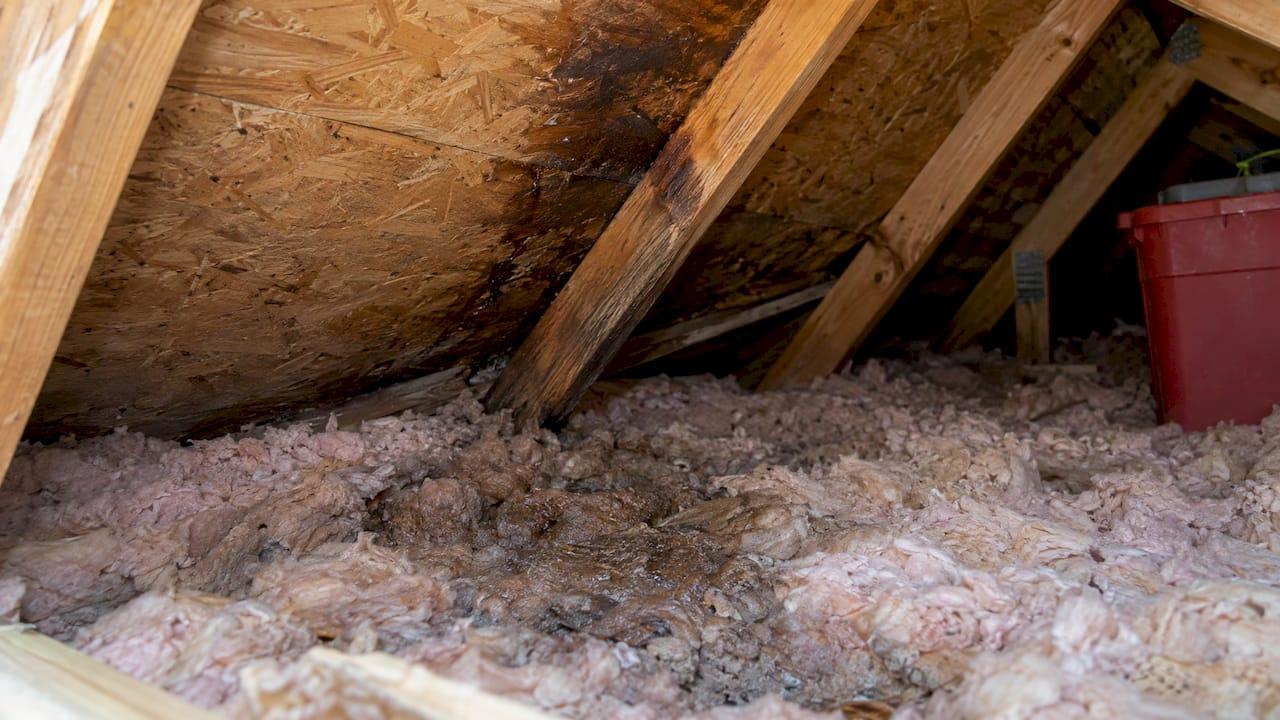
If the odor comes and goes with the weather, think water entry. Rain can get in around a window, through a flashing failure, or through a small roof leak that wets the attic insulation and then the ceiling. The smell is strongest when the humidity is high and fades when it dries out, which makes people think it is nothing. It is not nothing. Each wet cycle gives mold another chance to grow. If your smell tracks the rain, start in the attic and along exterior walls. Our guide on roof leak mold covers what to do before it spreads, and this piece on mold from a roof leak explains why the leak has to be fixed at the roof first.
The smell that is strongest when the AC runs
If the smell hits when the system kicks on, or it is strongest at the vents, the air handler, the drain line or the ducts are the first suspects. Moisture collects there, and the system then moves the smell through the whole house. This is how one damp spot turns into a whole-house smell. Our pages on condensation on AC vents and mold in air ducts walk through how to tell plain condensation from mold.
The smell after water damage
A burst supply line, a failed water heater, a dishwasher leak or a roof leak all start the same clock. The EPA says that if wet materials are dried within 24 to 48 hours, mold will not grow in most cases. The California Department of Public Health says porous materials that have stayed wet for more than a day or two may need removal even if they do not yet look or smell moldy.
So if you smell mustiness a few days after a leak, the window for easy drying may have closed. That does not mean a disaster. It means the wet area needs to be opened up and checked, not just aired out.
Can a house smell musty without mold?
Yes, but be careful with that idea. Dust, an old filter, a dirty drain, damp laundry or a closed-up house can all create a stale smell. In Florida, though, a musty odor that does not fade after you air out the house and clean the obvious sources should be treated as moisture until proven otherwise.
The Connecticut Department of Public Health says that when you smell mold but see none, it may be hidden behind wallpaper or paint or inside wall cavities. The next step is to identify the source and remove it.
How to trace the source yourself
Before you call anyone, spend 20 minutes on a methodical walk-through. This is the same order we would use.
- Follow your nose. Walk room to room with the AC off and windows closed for a few minutes. Note where the smell is strongest: a closet, a bathroom, a corner, one wall, a vent.
- Look for water signs. The California DPH lists water-stained or discolored surfaces, warped floors, peeling or bubbled paint, rotting wood, damp surfaces, and condensation on windows or walls.
- Check the usual hiding places. The EPA’s guide names the back side of drywall, wallpaper or paneling, the underside of carpets and pads, walls around leaking or condensing pipes, walls behind furniture, inside ductwork, and roof materials above ceiling tiles.
- Check under sinks and behind appliances. Look at the supply lines, the dishwasher, the refrigerator ice line and the water heater pan.
- Look at the AC. Check the drain pan, the condensate line and the area around the air handler for standing water or slime.
- Check the baseboards. Mold often starts at the bottom of a wet wall. Do not pull the trim off first: read what to do before you pull a baseboard off, because disturbing growth can spread spores.
- Check the attic and the ceiling. Look for stains, damp insulation or a smell that is stronger upstairs.
Write down what you found and where. If you do end up making an insurance claim, notes and dated photos help.
What not to do
Do not mask it. Spray or plug-in air fresheners cover the smell without touching the cause. The University of Missouri Extension specifically cautions against using them to hide a musty odor.
Do not mix cleaners. If you clean a hard surface, the Wisconsin Department of Health Services warns to never mix ammonia or bleach with other household cleaners, because a toxic gas can form and cause serious injury or death.
Do not paint or seal over a suspect spot. Coating a damp wall hides the smell for a while, but the moisture is still there. Our page on encapsulation versus removal explains what holds up and what comes back.
Do not disturb a large area. Scrubbing or tearing out wet drywall without containment can push spores into the rest of the house.
What you can handle yourself
A small patch on a hard surface, with the water source already fixed, is something many homeowners handle. The Massachusetts guide for homeowners says to fix the moisture source, clean the mold with detergent and water, and dry the area completely within 24 to 48 hours. It also says to confirm that visible mold and odors are gone before you repair anything. If the odor remains, there may be a moisture problem still, or the area may not have been cleaned or dried well enough.

The EPA also advises throwing out moldy porous materials such as ceiling tiles and carpet, since they cannot be cleaned thoroughly. If you go this route, we lay out the full steps in our DIY mold removal guide, including when to stop.
When the smell is a job for a licensed professional
These are the clear stop signs:
- Mold covers more than 10 square feet. The CDC says to consider a professional at that size. That is roughly a 3-by-3-foot patch.
- Mold covers more than 100 square feet. The HUD field guide states that the EPA and CDC recommend trained remediation professionals at that size, a 10-by-10-foot area.
- You smell mold and cannot find it. The California DPH says you may need a contractor experienced with water damage assessment, and that thorough investigation may require opening building materials to find hidden dampness.
- The smell came after a leak or flood. Wet cavities are not visible from the outside.
- The AC is involved. Mold in the air handler or ducts spreads through the house.
- Someone in the home is sensitive. The Illinois DPH lists infants, children, older adults, people with weakened immune systems, and people with asthma or allergies as groups who may be more sensitive. If anyone in the house has unexplained symptoms, talk to their doctor about the symptoms. Our page on mold exposure symptoms and warning signs explains what mold can and cannot tell you about health, without diagnosing anything.
In Florida, mold assessment and mold remediation are separately licensed. Our guide to verifying a licensed mold remediator shows how to check a license before you hire anyone.
How to tell when the problem is actually solved
The California DPH says the best sign that remediation worked is that the moisture source is fixed, damaged materials are cleaned or removed, and what remains is dry and free of visible mold and mold odor. No mold test can show whether remediation was successful. That is the standard we hold a job to: the water stopped, the damaged material gone, the area dry, and the smell gone.

The Connecticut DPH adds a realistic goal: remove visible mold and bring hidden mold down to the levels found in similar unaffected areas. A home cannot be made completely mold-free, because mold comes in on clothing, shoes and pets. A musty smell that returns a week after “cleanup” usually means a wet source was missed.
The HUD guide offers sensible protection for any job: get a written estimate with a detailed scope, and hold final payment until the work passes inspection with no mold odors.
Why we put the order of the job first
When a homeowner calls about a musty smell, the first job is finding where the water is. Everything after that depends on it. If the source is hidden in a wall, you do not know what it will cost until the wall is open, and that is where homeowners get nervous.
So we do it in a set order. We look first, we explain what we found, and we lay out the options, including what it costs if you pay yourself and what happens if insurance does not pay. Nothing comes out of the house until you know who is paying for it and you have decided to go ahead.
I hold Florida licenses as both a mold assessor and a mold remediator, and I spent close to a decade as a Florida home inspector before starting this company. When you call, I answer. When there is a job, I come out. We also do the rebuild, drywall, tile, cabinets, counters, flooring and trim, so the company that opens the wall is the one that closes it. And we handle the insurance claim from start to finish.
If you want to handle a small patch yourself, I will give you the instructions in detail. If it is bigger than that, or you cannot find where the smell comes from, call me.
John Foutz
Getting someone out this week
If the smell is new, tied to a leak, or you cannot trace it, we start with a free mold inspection. We can also arrange laboratory testing and air sampling where it helps. If the inspection finds growth, our mold remediation covers removal. If the cause is a recent leak, water damage restoration gets the structure dried before it becomes a mold job. The same company does the reconstruction afterward.

We serve twenty-five cities across Seminole, Orange, Volusia and Lake counties, including Lake Mary, Longwood, Winter Springs and Orlando. Our Google rating is 5.0 from 38 reviews. To book, start at ready2inspect.com.
FAQ
Why would my house suddenly smell musty?
A sudden musty smell usually means a new moisture source: a leak, a roof or window that let rain in, a clogged AC drain line, or a spell of high humidity. The EPA says a moldy odor suggests mold is growing and should be investigated. Check for water signs and call a licensed professional if you cannot find the cause.
Can a house smell musty without mold?
Sometimes, from dust, an old filter, damp laundry or a dirty drain. But a musty smell that stays after you clean and ventilate often means hidden dampness. The Connecticut DPH says mold may be hidden behind paint or inside wall cavities, so the odor is a reason to look for water, not to dismiss it.
How do I get rid of a musty smell in my house?
Find and fix the moisture source first. Then clean hard surfaces with detergent and water, dry everything within 24 to 48 hours, and discard porous materials that cannot be cleaned. If the smell returns, the source was probably missed or the area did not dry fully.
Is a musty smell after water damage normal?
It is common but not something to wait out. Porous materials that stay wet for more than a day or two can grow mold even before it is visible. If the smell appears after a leak, the wet area needs to be found and dried, and a licensed company can open the wall and check.
How do I stop my house from smelling musty?
Fix leaks quickly, keep gutters clean, slope the ground away from the foundation, and keep AC drip pans and drain lines clear, as the EPA advises. In damp areas such as crawl spaces, the University of Pennsylvania notes dehumidifiers are often used to keep humidity below 60%.
Sources
- What does mold smell like? | US EPA
- A Brief Guide to Mold, Moisture and Your Home | US EPA
- Hidden Hazards | NIH News in Health
- The Facts about Mold: For Everyone | University of Pennsylvania
- Reducing Your Exposure to Mold | Illinois Department of Public Health
- Frequently Asked Questions about Mold | California Department of Public Health
- Helpful Tips for Homeowners and Tenants | Connecticut Department of Public Health
- Managing household mold | MU Extension
- Controlling Mold and Moisture | Wisconsin DHS
- Mold Cleanup, Repairs, and Excess Moisture Control | Massachusetts
- Preventing Mold | Natural Disasters | CDC
- Creating A Healthy Home: A Field Guide for Clean-up of Flooded Homes | HUD
- Mold From a Roof Leak: What to Do and Who to Call