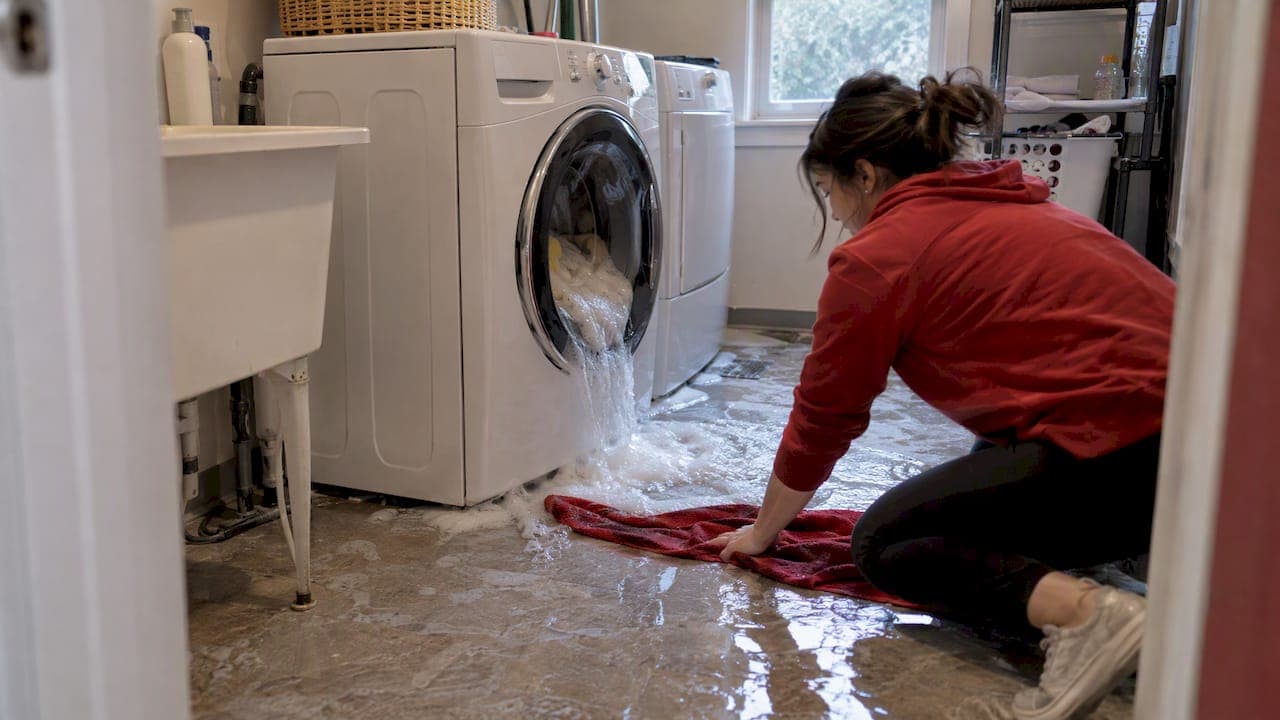

The moment you see water spreading across the floor, stop the cycle, shut off the water supply valves and power to the washer, then contain the spill with towels or a wet/dry vacuum. Do not restart the machine until you know what caused it. For the drying work that follows, the EPA recommends acting fast, and a local restoration company can step in if the water has already soaked into walls or floors.
TL;DR:
- Water overflow often results from a stuck inlet valve or a clogged standpipe, requiring the initial shutoff and containment within five minutes.
- An isolation test can quickly determine if the problem stems from the machine’s internal components or the home’s plumbing system.
- Inside the washer, a faulty inlet valve or a misreading pressure switch is usually responsible, while drain backups often relate to improper hose placement or deeper pipe blockages.
- The EPA recommends drying all water-damaged materials within 24 to 48 hours to prevent mold growth, especially for porous surfaces like drywall and carpet.
- Professional restoration is necessary if water reaches walls, flooring, or cabinetry, or if visible mold or contamination is present beyond surface drying.
Table of Contents
- Immediate stop-and-contain checklist (first 5 minutes)
- Quick diagnosis: machine fault vs. plumbing problem
- Mechanical causes inside the washer and safe checks
- Plumbing and drain causes and what to do about them
- Step-by-step DIY fixes, from low-risk to higher-risk
- Drying, contamination risk, and mold prevention after an overflow
- Maintenance checklist and behaviors to reduce overflow risk
- When to call a restoration pro
- What actually matters when your washer overflows
- How Ready 2 Inspect can help after a washing machine overflow
- FAQ
- Sources
Immediate stop-and-contain checklist (first 5 minutes)
Water on the floor spreads fast, and every extra minute adds square footage to your cleanup. Work through these steps in order.
- Stop the machine and cut power. Unplug it if the cord is reachable and dry, or trip the breaker. Never touch an electrical panel or outlet with wet hands.
- Shut off the water. Close the hot and cold valves behind the washer. If they are stuck or hard to reach, shut off the main water valve for the house.
- Contain the water. Towels, buckets, and a wet/dry vacuum will slow the spread. Move boxes, rugs, and anything valuable off the floor and away from outlets.
- Check the water. If it smells foul or looks discolored, stay away from it and call a plumber or restoration company right away.
Do not run the washer again until you have identified the cause. Pumps, solenoids, and level switches carry live current, and a repeat overflow with the machine unattended can soak through a subfloor before you notice.
Pro Tip: Keep a few old towels and a cheap wet/dry vacuum stored near the laundry room. Reaching for them in the first sixty seconds makes the difference between a mop-up and a flood.
Quick diagnosis: machine fault vs. plumbing problem
Once the water is contained, you need to know whether the washer itself is broken or whether the problem is downstream in your home’s drain lines. A simple isolation test settles it. Disconnect the drain hose from the standpipe and run it into a nearby utility sink, then start a drain-only cycle. This Old House recommends this exact test because it separates appliance problems from plumbing problems without any tools.
- Water drains fine into the sink: the standpipe or house plumbing is the likely culprit.
- Water still backs up or overflows: the washer itself has a mechanical fault.
- Overflow within a few seconds: timing suggests a clog right at the standpipe or hose connection.
- Overflow after thirty seconds to a minute: the blockage is likely deeper in the pipe.
- Washer keeps filling even when unplugged: that points to a stuck inlet valve, a mechanical part rather than a control issue.
- Other drains back up too, or you smell sewage: that is a plumbing problem, not a washer problem, and it needs a plumber.
Write down what you observe during this test. It will save time whether you end up calling an appliance technician or a plumber.
Mechanical causes inside the washer and safe checks
Several parts inside a washing machine can cause it to overfill, and some are safer to check than others.
- Inlet valve or solenoid stuck open. Inspectapedia notes that a washer continuing to fill with the power cord pulled almost always means a mechanical inlet valve failure, not a sensor glitch. This part usually needs replacement rather than a repair.
- Fill-level or pressure switch. This switch reads water level through a small plastic tube. If the tube is clogged, kinked, or knocked loose, the switch can misread the level and let the machine keep filling. You can often inspect the tube visually for kinks or disconnection without opening anything electrical.
- Drain pump and filter. Many front-load machines have an access panel near the bottom front where lint and debris collect. Clearing it is usually safe once the washer is unplugged, though panel locations vary by brand and model.
- Overloading and detergent. Too much detergent, especially non-HE formula in an HE machine, can cause oversudsing that looks like an overflow. Whirlpool points to overloaded loads and worn door seals as common, fixable causes of apparent leaks.
Pro Tip: Anything that requires opening an electrical housing or swapping a solenoid belongs to a trained appliance technician. Guessing at 120-volt components is how a leak turns into a bigger repair bill.
Plumbing and drain causes and what to do about them
Sometimes the washer is fine and the house plumbing is the real problem. The drain hose needs room to breathe inside the standpipe, and crowding it causes trouble. AppliancePartsPros recommends leaving at least a half-inch air gap around the hose to stop siphoning and keep drainage moving.
- Check for shallow clogs first. Lint, soap scum, and pet hair build up near the standpipe opening. A hand auger or a simple flush with hot water often clears this.
- Rent a longer snake for deeper blockages. If a hand auger does not reach the clog, a longer drain snake from a hardware store can often clear a deeper obstruction.
- Watch for signs the main line is involved. If other drains in the house are slow or backing up at the same time, or if toilets gurgle when the washer drains, the problem is likely in the main sewer line, and it is time to call a licensed plumber.
- Skip the chemical drain cleaners. Caustic cleaners rarely clear lint and soap buildup, and they can damage pump seals and rubber gaskets in the washer itself.
A licensed plumber has the equipment to clear a main line safely and confirm whether your drainpipe is sized correctly for your washer’s output.
Step-by-step DIY fixes, from low-risk to higher-risk
Work through these in order, and test after each one before moving to the next.
- Reposition the drain hose. Check for kinks, confirm it sits with the correct air gap inside the standpipe, and tighten the inlet hose connections at the wall and the back of the machine.
- Clean filters and traps. Remove and clean the pump filter and any lint traps. Pull the drain hose and check it for blockages along its length.
- Flush a shallow clog. If you suspect buildup right at the standpipe, flush it with hot water or clear it with a hand auger.
- Try a hand snake, carefully. If the clog sits deeper, a hand drain snake inserted into the standpipe, never into the washer itself, can reach further. Stop if you feel firm resistance; forcing it can damage the pipe.
- Test after every step. Run a drain-only cycle and watch where and when water backs up. If the overflow continues after you have tried all of these, it is time to call a plumber or appliance technician.
Pro Tip: Keep notes on which fix you tried and what happened. If you end up calling a professional, that information saves them a diagnostic trip and saves you money.
Drying, contamination risk, and mold prevention after an overflow
Washing machine overflow water is not the same as clean tap water. The EPA classifies it as gray water, meaning it carries contamination risk and needs proper cleanup, not just a mop and a fan.
The cleanup window is short. EPA guidance calls for drying wet materials within 24 to 48 hours to prevent mold growth. Carpet, drywall, and upholstery left wet beyond that window are often compromised enough that they need to be removed rather than dried in place.
Work through cleanup in this order:
- Wear gloves and, if the water looks contaminated, a mask.
- Extract standing water with a wet/dry vacuum before it soaks deeper.
- Pull out saturated carpet padding, baseboards, or other materials that cannot dry fast enough.
- Ventilate the space and run fans or a dehumidifier once you have confirmed it is electrically safe to do so.
- Stop and call a professional the moment you see visible mold growth.
Photograph the damage as you go and save any receipts tied to cleanup or replacement. That documentation matters if you end up filing an insurance claim.
Maintenance checklist and behaviors to reduce overflow risk
Most overflow trouble is preventable with a few habits.
- Replace supply hoses every five years, even if they look fine, and consider braided stainless steel hoses, which hold up longer than plain rubber.
- Use the correct detergent. HE machines need HE detergent in the right amount, since oversudsing from the wrong type can mimic an overflow.
- Run a quarterly check. Clean the lint trap, check the pump filter, confirm the drain hose still sits with its air gap intact, and run an empty hot-water cycle to clear residue.
- Have a plumber check pipe sizing if you installed a newer high-flow washer on an older standpipe or drainpipe, since undersized plumbing can struggle to keep up.
A quarterly ten-minute check costs you almost nothing next to a flooded laundry room.
When to call a restoration pro
Some overflows are a mop-and-towel job. Others need a licensed crew, and the line between the two usually comes down to water quality and how much got wet. Call a professional when the water is visibly contaminated, when you see mold starting to form, when walls, flooring, or cabinets have soaked through, or when you cannot get everything dry within that 24 to 48 hour window.
A licensed restoration company brings emergency water extraction, structural drying equipment, moisture mapping to find hidden wet spots, mold inspection and remediation, and full reconstruction once the drying is done. John Foutz, owner of Ready 2 Inspect, holds Florida licenses as a mold assessor and mold remediator and is InterNACHI certified, built on close to a decade of experience as a home inspector before starting the company. He answers the call himself and handles the inspection, the remediation, and the rebuild under one roof, which matters when a laundry room overflow has already reached the drywall or subfloor.

What actually matters when your washer overflows
Most advice on this topic rushes straight to parts and tools, as if the fix always starts with a wrench. It does not. The sequence matters more than the tool: stop the water and power first, figure out whether the machine or the plumbing is at fault second, and only then decide whether a fix is within your skill level.

Where homeowners get it wrong most often is the drying step. People mop the surface, point a fan at it, and call the job done, without checking whether water soaked into the baseboard or under the flooring. Surface-dry is not the same as actually dry, and that gap is exactly where mold starts a few days later, quietly, out of sight.
If you take one thing from this guide, let it be this: treat the first 48 hours as the real deadline, not the moment the floor looks dry. That is the window that decides whether you are dealing with a laundry mishap or a remediation job.
— John Foutz
How Ready 2 Inspect can help after a washing machine overflow
If your overflow soaked into walls, flooring, or cabinets, drying it yourself only gets you partway there. Ready 2 Inspect handles water damage restoration, mold remediation, and the reconstruction that follows, all under one license, so the same crew that pulls out wet drywall is the one that puts new drywall back.

The company owner can personally assess the damage and explain pricing and insurance coverage options before work begins, so you make informed decisions up front. If you are not sure whether your situation needs a professional, a free mold inspection is a low-pressure way to find out. Reach out through Ready 2 Inspect to schedule an assessment.
FAQ
Why is my washing machine flooding the floor?
Flooding usually traces back to a stuck inlet valve that keeps filling the tub, a clogged or dislodged drain hose, or a blocked standpipe that cannot keep up with the drain cycle. Running the isolation test of draining into a utility sink quickly tells you whether the washer or the plumbing is at fault.
How do I fix an overflow error on my washing machine?
Start by unplugging the washer and checking the fill-level switch’s pressure tube for kinks or disconnection, since a faulty reading there is a common cause of overfill errors. If the tube looks fine, the inlet valve itself may be stuck and typically needs replacement by a technician.
What happens if a washing machine overflows?
Overflow water is classified as gray water with contamination risk, so it needs proper cleanup rather than a quick wipe-down, according to EPA guidance. Materials wet beyond 24 to 48 hours are at risk for mold and may need to be removed.
Why does my washer keep filling up during the spin cycle?
This points to a mechanical issue rather than a settings problem, most often a stuck inlet valve or a fill-level switch that is misreading the water level. If the washer keeps filling even when unplugged, the inlet valve is the likely failure point and usually needs replacement.
How long can wet materials sit before mold becomes a risk?
EPA guidance recommends drying wet materials within 24 to 48 hours. Porous materials such as drywall, carpet, and upholstery left wet beyond that window are often compromised enough to need removal rather than drying in place.
Sources
- A brief guide to mold, moisture, and your home — EPA
- How to fix washing machine drain overflows — This Old House