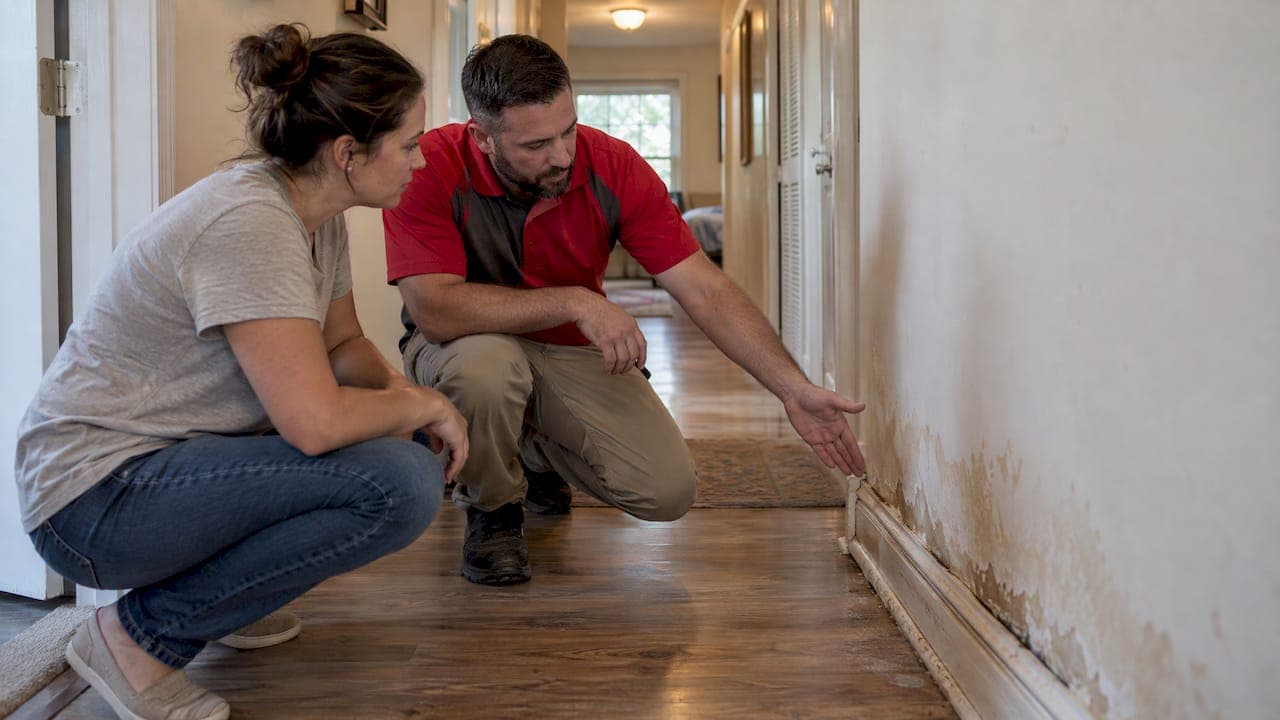
$1,383–$6,369 Water Damage Estimates for Homeowners: What to Ask

A typical water damage estimate falls between roughly $1,383 and $6,369, depending on how much water hit your home and what it touched before you got it stopped. The biggest swing factors are water type, square footage, and whether the job stays limited to drying or turns into a full rebuild. Your first move should be to document everything and get a licensed estimate scheduled fast.
TL;DR:
- Water damage restoration costs typically range from $1,383 to $6,369, with higher expenses when mold, structural, or electrical repairs are involved.
- Estimates should clearly separate mitigation from reconstruction costs, including items like moisture logs and equipment rentals, to prevent disputes.
- Handling clean water spills under 10 square feet can often be done DIY, but larger or contaminated water requires professional intervention to prevent mold and hidden damage.
- Licensed professionals use standardized tools like Xactimate, applying industry guidelines, to produce estimates that hold up during insurance reviews.
- Proper documentation before the estimate, including photos, timestamps, and receipts, speeds up claims and helps mitigate future scope or cost issues.
Table of Contents
- Typical cost ranges and what drives price
- What a professional water-damage estimate includes
- Timeline, mold risk and when mitigation becomes remediation
- How to prepare for an on-site estimate and what to document for insurance
- Practitioner perspective: owner-led licensed scoping and claims management
- Prioritize documented scope over the lowest bid
- How we handle water damage estimates and restoration
- FAQ
- Sources
Typical cost ranges and what drives price
Most water damage jobs land somewhere between $1,383 and $6,369 nationally, with the final number shaped by three things: how contaminated the water was, how large an area it reached, and how much reconstruction follows the drying work, according to Angi’s cost data. Clean water from a supply line costs the least to handle. Gray water, like overflow from a washing machine, needs more careful cleanup. Black water, which includes sewage backups and storm flooding, requires full containment and protective gear, which raises labor costs significantly.
Per-room costs scale with materials involved:
- Drywall replacement in a single room often runs a few hundred to over a thousand dollars depending on size and finish.
- Flooring repair varies widely by material, with hardwood costing more to restore than tile or carpet.
- A flooded basement typically costs more overall because of larger square footage and higher odds of hitting electrical or structural components.
A typical water damage restoration project nationally runs between $1,383 and $6,369, and that range widens further when mold, structural repairs, or electrical work get added to the scope. When you read an estimate, look for these costs broken out separately rather than folded into one lump sum. A vague total makes it hard to tell whether you’re paying for labor, equipment, or materials, and it makes comparing bids nearly impossible.
What a professional water-damage estimate includes
A real estimate separates two phases: mitigation and restoration. Mitigation is the emergency work, extracting standing water and drying out the structure before mold sets in. Restoration is what comes after, rebuilding drywall, flooring, cabinets, and trim once everything tests dry. Most restoration companies invoice these phases separately, and some only handle one or the other, which is worth asking about up front.
A complete estimate usually lists:
- Emergency response and water extraction charges
- Equipment rental days for air movers and dehumidifiers
- Daily moisture readings documenting the drying progress
- Demolition of unsalvageable materials
- Reconstruction tasks broken down by room and material
Many professional estimators build these line items using Xactimate, an industry estimating platform that applies standardized scoping rules so the numbers hold up when insurers review them, according to Verisk’s description of its XactScope feature. That standardization follows IICRC S500 guidelines, the water damage restoration industry’s reference standard, and it matters because an estimate built this way is harder for an insurer to dispute line by line.
Pro Tip: Ask your estimator for daily moisture logs in writing. Without them, insurers sometimes push back on drying time later in the claim.

Timeline, mold risk and when mitigation becomes remediation
Materials that stay wet past 24 to 48 hours should be treated as a mold risk, according to EPA guidance on mold and moisture. Miss that window and you’re often looking at an added few thousands of dollars for professional mold remediation on top of the original water damage scope.
Water category changes everything about the job:
- Clean water (a supply line, an appliance) carries the lowest risk and the simplest cleanup.
- Gray water needs protective gear and more thorough disinfection.
- Black water requires full containment, respirators, and professional handling every time.
Small, clean-water spills under about 10 square feet are reasonable to dry yourself with fans and a dehumidifier. Anything larger, anything involving gray or black water, or any spill where you’re not sure what got wet behind the walls calls for a professional with a moisture meter. Hidden moisture in wall cavities or subfloors is the main reason jobs run longer and cost more than the surface damage suggests.
How to prepare for an on-site estimate and what to document for insurance
Walking into the estimate with good documentation speeds up the process and strengthens your insurance claim. Before the estimator arrives:
- Photograph and video every affected room, including close-ups of standing water, stained walls, and damaged belongings.
- Note the date and time you discovered the damage and when the water source was stopped.
- Collect receipts for damaged appliances, furniture, and flooring, along with any recent plumbing or HVAC service records.
- Write down what you believe caused the leak or flood, even if you’re not certain.
When the estimator walks through, ask directly about scope: how many equipment days they expect to bill, whether they’re taking moisture readings and logging them, and what the reconstruction plan looks like once drying finishes. If you’re collecting multiple bids, compare them side by side and watch for red flags: a scope with no moisture readings, vague line items like “miscellaneous labor,” or a total that’s dramatically lower than the others with no explanation.
Pro Tip: Insurers often issue a preliminary payment based on an initial inspection. Document thoroughly anyway, since most policies allow you to reopen a claim if more damage surfaces later, per the Insurance Information Institute.
Practitioner perspective: owner-led licensed scoping and claims management
Accurate scoping starts with licensing. A mold assessor and remediator who holds the proper state credentials knows how to document moisture levels and water categories in a way that stands up to insurance scrutiny, not just a way that looks thorough on paper.
What separates a defensible scope from a guess:
- Moisture mapping across every affected surface, logged daily, not estimated once
- Photos tied to specific rooms and timestamps, matched against the written scope
- One licensed company handling both mitigation and reconstruction, so nothing gets lost between a demo crew and a separate rebuild contractor
When the same company opens the wall and closes it, there’s no handoff where scope details get dropped or re-negotiated.
Prioritize documented scope over the lowest bid
The cheapest bid rarely stays cheap. A vague scope invites supplements later, and a slow start invites mold. Speed and documentation reduce total cost more reliably than shaving the initial number.
If an insurer offers a partial payment early, take it, but keep documenting: policies generally allow you to reopen the claim once the full scope is clear. Before hiring anyone, check three things: their license, whether they’re taking moisture readings, and whether the scope is in writing.
— John Foutz
How we handle water damage estimates and restoration
We start every water damage job with a clear scope before anything comes out of the house, so you know the cash price and the insurance outlook before you commit to anything. Our owner, a licensed mold assessor and remediator, comes out personally rather than routing your call through a dispatcher, and the same team that handles water damage restoration also does the reconstruction and manages the insurance claim from start to finish.

Have your photos, timestamps, and any plumbing service records ready when we arrive, and we’ll walk the property, take moisture readings, and explain the scope before any work begins.
- Free mold inspection and lab testing available for homes showing mold risk after water exposure
- Licensed mold remediation if drying windows were missed
- Full reconstruction including drywall, flooring, cabinets, and trim, under one contract
| Service | What it covers |
|---|---|
| Water damage restoration | Extraction, drying, moisture monitoring |
| Mold remediation | Licensed assessment and removal |
| Reconstruction | Drywall, flooring, cabinets, trim |
| Free mold inspection | On-site assessment and lab testing |
If you’re working with a drywall specialist on your own repairs, this guide to restoring water-damaged walls covers the steps, and PNV Leads can help you find local contractors for trades outside our scope. For homeowners in Lake Mary, Orlando, Winter Park, and the surrounding Central Florida area, request an inspection through our home page to get started.
FAQ
How do you write a water damage estimate?
A water damage estimate lists the water category, affected square footage, equipment and labor for extraction and drying, and separate reconstruction costs for materials like drywall and flooring. Professionals typically use standardized software such as Xactimate to apply consistent line items, according to Verisk. Homeowners writing their own rough estimate should separate mitigation costs from rebuild costs to avoid underestimating the total.
How much does water damage typically cost?
Water damage restoration typically costs between $1,383 and $6,369 nationally, depending on water category, square footage, and whether reconstruction is needed. Clean water from a supply line costs less to address than contaminated gray or black water.
What does Xactimate cost for water damage removal?
Xactimate is an estimating platform used by restoration professionals and insurers to standardize scoping and pricing, not a direct cost homeowners pay. It calculates equipment needs and line items based on IICRC S500 standards, which helps estimates hold up during insurance review, according to Verisk’s XactScope materials.
What counts as minor water damage?
Minor water damage generally means a small, clean-water spill affecting less than about 10 square feet, such as a brief appliance leak caught quickly. These cases are often safe to dry yourself with fans and a dehumidifier, provided the water source was clean and the area dries within the 24 to 48 hour window recommended by the EPA.
Sources
- A brief guide to mold, moisture, and your home | US EPA
- Verisk: New Xactimate feature helps property professionals estimate and manage water mitigation
- How much does water damage restoration cost? | Angi