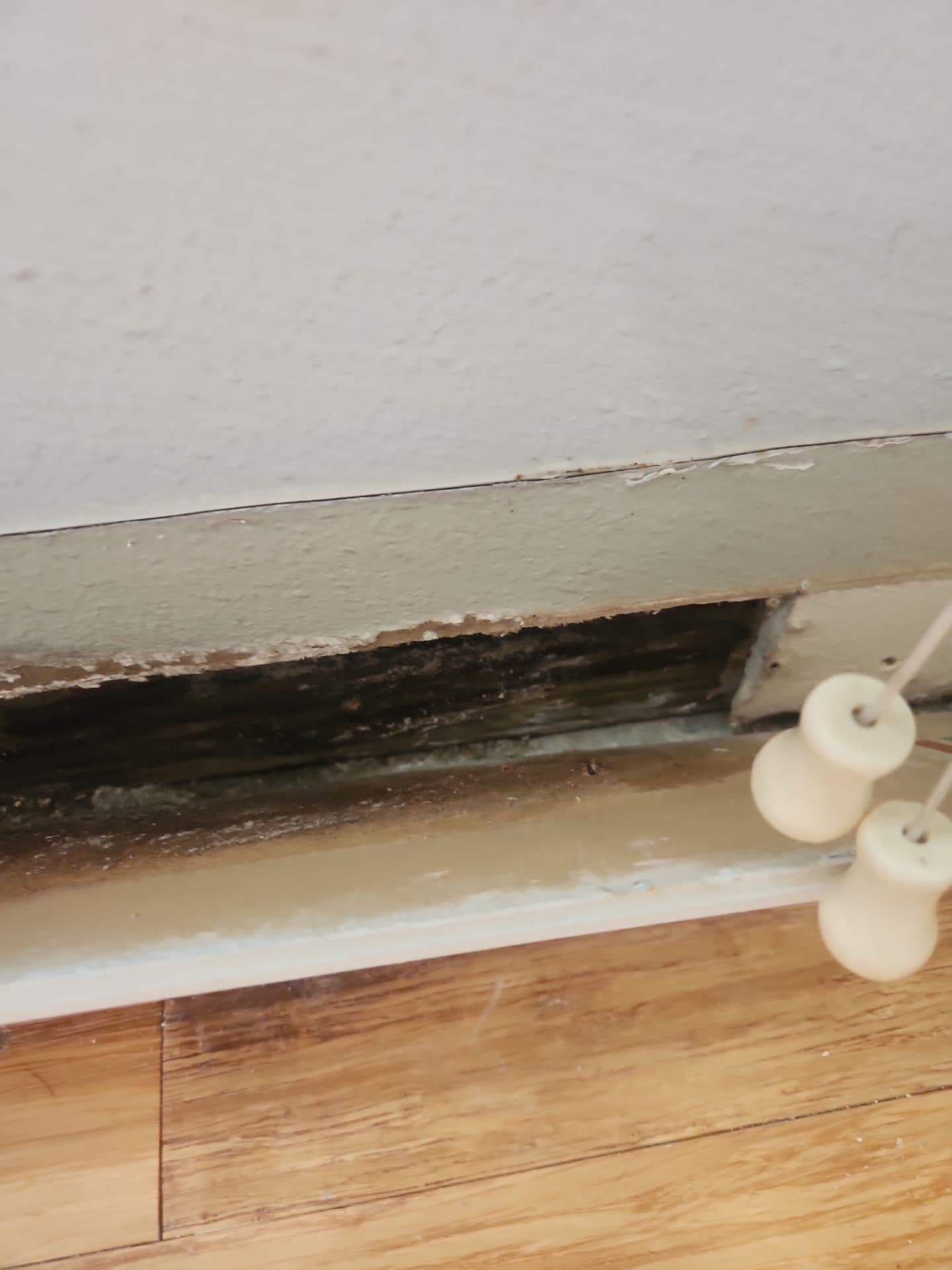
A small area of surface mold on a hard, non porous surface is usually a homeowner job: fix the moisture first, protect yourself, clean with detergent and water, dry the area completely, and watch it for two weeks. Stop and call a professional if it covers a large area, involves the air conditioning, followed dirty water, or anyone in the house has asthma or a weakened immune system.
Why a remediation company is publishing this
Because the alternative is you doing it badly, or paying somebody else to do it badly. John's position on it is short: he does not mind whether you hire him, he minds whether the job gets done properly.
So this is the real version, with the real limits, not a page that hedges itself into uselessness so you give up and call.
Stop here if any of these are true
These are not upsell thresholds. They are the situations where a homeowner job makes things worse, and every one of them has a specific reason.
- It covers a large area. Roughly ten square feet or more, about a three foot by three foot patch. Past that you are disturbing enough material that containment and filtered air stop being optional.
- It is in the air conditioning. Growth in a handler, a coil, or ductwork gets distributed to every room every time the system runs. Do not open it up and clean it yourself.
- The water was dirty. Sewage, a toilet overflow past the trap, or floodwater from outside. That is a contamination problem before it is a mold problem.
- Somebody in the house has asthma, a lung condition, an allergy to mold, or a weakened immune system. Disturbing growth puts a lot of spores into the air quickly.
Find the water first, always
Cleaning before you fix the moisture is wasted work. It will come back in the same spot, usually within a few weeks, and you will have learned nothing except that cleaning did not work.
Look above and behind, not just at the patch. Water travels. A stain on a ceiling is where it came out, not where it got in. Check the roof line above it, the supply and drain lines nearest it, the air conditioning drain pan and its line, window and door seals, and any wall shared with a bathroom or a laundry.
If you cannot find it, that is a legitimate reason to get somebody with a moisture meter and a thermal camera out, even if you intend to do the cleaning yourself.
What to wear and what to have ready
This part is cheap and people skip it. Do not skip it.
- An N95 respirator at minimum, fitted properly against your face.
- Goggles without side vents, and disposable gloves.
- Old clothes you can wash straight away, or disposable coveralls.
- Plastic sheeting and tape to close the doorway, and something to cover vents in the room.
- A HEPA vacuum. A normal vacuum blows spores back into the room through the exhaust.
- Detergent and water. Rags and a stiff brush. Heavy duty bin bags.
The actual method
Nothing exotic here. Done properly it is unglamorous.
- Close the room off. Sheet the doorway, cover the supply and return vents, and turn the air conditioning off while you work.
- Open a window if you can, and put a fan in it blowing outward so air leaves the room rather than travelling through the house.
- Clean hard, non porous surfaces with detergent and water and a brush. Tile, glass, metal, sealed hardwood, bathtubs. Scrub it off rather than wiping it around.
- Throw out porous material rather than cleaning it. Drywall, ceiling tile, carpet pad, insulation, cardboard. Once it is into the material you are not getting it out, and this is the step people resist most.
- Bag what you remove inside the room, seal the bag, wipe the outside of it, and carry it out. Do not walk it through the house open.
- Dry the area completely. Fans and a dehumidifier, for days rather than hours. This matters more than the cleaning did.
- HEPA vacuum the area and the surrounds once everything is dry.
- Look at it again in two weeks. If it is back, the water source is still there and cleaning it a second time will not help either.
Things not to do
Two of these are extremely common and one of them is dangerous.
- Do not mix bleach and ammonia, or bleach and any other cleaner. It produces a toxic gas. This is the dangerous one.
- Do not rely on bleach on porous surfaces. It is mostly water, the water soaks in, and you have wet the material you were trying to treat.
- Do not paint over it. Same problem as spraying a sealant over it, and it hides the evidence from whoever looks next.
- Do not run a normal vacuum over it. You are aerosolising what you just disturbed.
- Do not dry sweep or dry brush it. Damp cleaning keeps it out of the air.
What testing does and does not tell you
If you can see it and you can smell it, a lab test mostly tells you what you already know. Testing earns its cost when the question is genuinely open: something smells musty and nothing is visible, or a health issue is involved, or somebody needs a documented result for an insurer, a landlord, or a sale.
One Florida specific point worth knowing before anyone tests anything for you. In this state a company cannot be the assessor and the remediator on the same job when a formal assessment is involved. That rule exists to protect you from the obvious conflict, which is somebody testing for a problem and then selling you the fix for it.
If you get partway in and want a hand
Call and say where you got to. There is no charge for looking at what you are dealing with and telling you plainly whether you are near the end of it or in over your head.