Roof Leak Mold: What to Do Before It Spreads

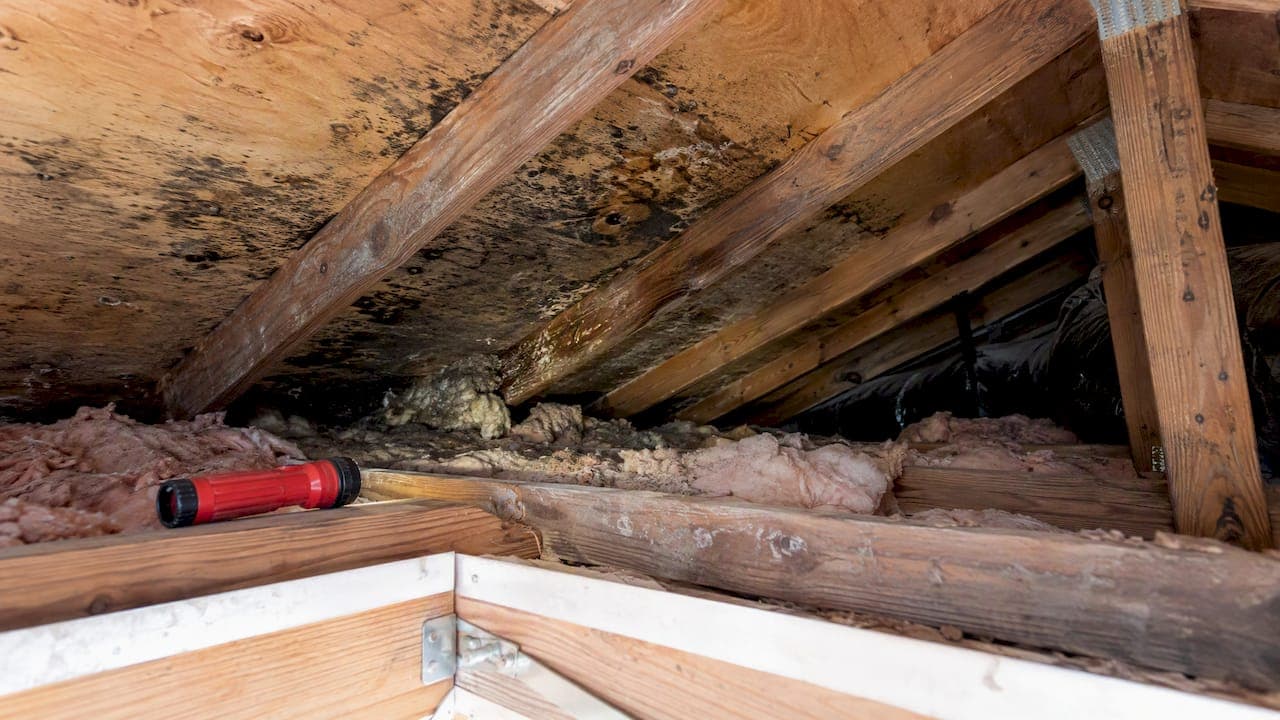
Yes, a roof leak can cause mold, and it often does so out of sight. Water gets into the attic, insulation, drywall or carpet, and if those materials stay wet, growth can start. The EPA says that drying wet materials within 24 to 48 hours prevents mold in most cases. In Central Florida’s humidity, that window matters. This guide covers what to do in the first two days, how to tell a small patch from a real job, what Florida homeowners insurance may pay, and where we draw the line between do-it-yourself and calling someone.
TL;DR
- Stop the water first. Tarp or patch the roof, then dry everything that got wet within 24 to 48 hours.
- A small stain does not mean a small problem. Mold can sit above the ceiling, inside insulation, or under carpet padding.
- Under about 10 square feet on a hard surface with clean water, many homeowners can handle it. Larger areas, soaked drywall or insulation, or any health concern call for a licensed professional.
- Florida insurance may pay for the water damage and some mold, but mold limits are often low. Document everything before anything is torn out.
- Painting or spraying over mold does not fix a roof leak problem. It usually comes back.
Table of Contents
- Why a roof leak turns into a mold problem
- What to do in the first 48 hours
- Signs the mold is already there
- Small patch or professional job?
- Can you paint or seal over it?
- Does Florida homeowners insurance cover mold from a roof leak?
- Our perspective: sequence matters more than speed
- When we would come out
- Preventing the next one
- FAQ
- Talk to the owner
- Sources
Why a roof leak turns into a mold problem
Mold needs moisture, something to eat, and time. A roof leak supplies the first and the house supplies the second. The EPA notes that mold grows on wood, paper, carpet and insulation, and because it digests what it grows on, it can damage those materials. Drywall paper, ceiling tiles, fiberglass batts with dust on them and roof decking all qualify.
The usual path looks like this:
- Rain gets past a failed shingle, flashing, or underlayment.
- Water runs along the decking or a rafter and soaks insulation.
- The drywall below takes it up from above, often a few feet from where the water came in.
- The stain shows up on the ceiling days or weeks later, after the cavity above has been wet the whole time.
That is why the stain you see is rarely the whole story. This Old House lists a ceiling water stain as the typical first interior sign, along with peeling paint and blistering drywall. By the time those show, the material behind them has usually been damp for a while.
Why Florida makes it faster
Our air is already wet. Attics in Seminole, Orange, Volusia and Lake counties run hot and humid, and a wet cavity does not get a chance to dry on its own. The air conditioning system can also pull spores and damp air around the house if the leak is near a return, a duct or the air handler. The EPA recommends keeping indoor humidity between 30 and 50 percent and no higher than 60. A cheap humidity meter tells you where you stand, though one reading is not the whole picture because humidity moves during the day.
What to do in the first 48 hours
This is the order we would follow in our own homes.
- Stop more water coming in. Tarp the area or have a roofer make a temporary repair. Do not climb on a wet roof. Keep receipts for any temporary work.
- Photograph and film everything. Take pictures of the stain, the attic, the roof damage and any wet belongings before you move anything. Date them if you can.
- Call your insurer. Notice should be prompt. In Florida, a new property claim must be reported within one year of the date of loss under Florida Statute 627.70132, but waiting makes damage worse and a gradual-leak argument easier for the insurer.
- Start drying. Move furniture off wet carpet, run fans and the air conditioner, and use a dehumidifier. Remove soaked items that cannot be dried.
- Do not run the system if the leak is near ductwork or the air handler. The EPA advises not running an HVAC system you suspect is contaminated with mold, because it can spread it.
- Do not tear out drywall or insulation yet unless it is needed for safety or to start drying. That brings us to the insurance question.
Signs the mold is already there
Look for these after any roof leak, even a small one:
- Dark, green or white spotting on a ceiling, near a vent, or along the top of a wall
- A ceiling that sags, bubbles or feels soft
- Paint that blisters or peels in the same spot after drying
- A musty smell that gets stronger when the air conditioner kicks on
- Damp or discolored insulation, visible through the attic hatch
- Stains that return after you repaint
A smell with nothing visible is still a reason to look. The EPA names roof materials above ceilings, wall cavities, carpet and pads, and ductwork as common hiding places. No visible mold does not mean a mold-free house.
Color tells you very little. People ask whether black mold is the dangerous kind. The EPA’s position is that moisture control, not the color of the growth, is the foundation of dealing with it. We treat any growth the same way: find the water, fix it, and remove what cannot be cleaned.
A note on symptoms
We do not diagnose illness and neither can a mold inspection. The CDC says a damp or moldy place causes no symptoms in some people, while others get a stuffy nose, sore throat, cough, wheezing, itchy eyes or a skin rash. People with asthma can react more strongly, and people with chronic lung disease or weakened immune systems face added risk. Those symptoms do not prove the leak caused them. If you or a family member has persistent congestion, breathing trouble or a worsening asthma problem, see your doctor, and tell them about the water damage. We cover this further in our guide to mold exposure symptoms and warning signs.
Small patch or professional job?
Here is the honest threshold. The EPA says a moldy area smaller than about 10 square feet, roughly a 3-by-3-foot patch, can usually be handled by the homeowner when it is on a hard, cleanable surface and the water was clean. Our rule of thumb follows that guidance.
| Situation | Reasonable to do yourself | Call a licensed professional |
|---|---|---|
| Size | Under about 10 sq ft | Larger than that, or more than one area |
| Surface | Tile, sealed wood, hard trim | Drywall, ceiling tile, insulation, carpet and pad |
| Water | Clean rainwater, dried within 48 hours | Wet longer than that, or contaminated water |
| Location | One visible spot you can reach | Inside the ceiling, attic, walls or near ductwork |
| People | Healthy adults | Asthma, lung disease, weak immune system, small children |
If you do it yourself
We will tell you how, because a small patch should not turn into a big bill. For a hard surface:
- Fix the leak and confirm it is dry.
- Wear an N95 respirator, gloves and goggles.
- Keep fans from blowing across the area into the rest of the house.
- Scrub with detergent and water, not bleach and not a spray-and-walk-away product.
- Dry the surface completely, with a fan and dehumidifier.
- Throw away porous materials that stay stained or smell. The EPA advises removing or replacing porous materials that cannot be completely cleaned.
- Check it again in a week and a month. If it returns, there is moisture you have not found.
Stop and call someone if the drywall is soft, if the patch is bigger than you thought once you start, or if it is near the HVAC system.
Can you paint or seal over it?
No, not as a fix. The EPA guidance is that mold must be cleaned up and the water problem fixed, and that painting or caulking over mold is likely to fail and may peel. Porous materials such as carpet, ceiling tile, insulation and drywall may need to come out, because mold can occupy places cleaning cannot reliably reach.
If someone has quoted you a spray-only or coating-only job for a ceiling that was wet from a roof leak, ask three questions:
- Has the water source been found and repaired?
- Will wet or moldy drywall and insulation be removed, or just coated?
- How will we know it is gone afterward?
A treatment that skips those answers is a cosmetic fix. It may look fine for a season and then come back through the paint.
Does Florida homeowners insurance cover mold from a roof leak?
Sometimes, and the answer depends on the cause of the water and the wording of your policy. Here is what the official sources say.
- Covered cause, limited mold. The Florida Department of Financial Services says mold that results from a covered peril is typically covered, though the amount is often limited. It reports $10,000 as the most common limit, and says some insurers exclude mold or sell higher limits for an added premium.
- Sudden versus gradual. Insurance regulators describe policies as built for sudden and accidental events. A storm opening your roof is treated very differently from a slow leak that went unrepaired for years. The Washington Insurance Commissioner explains this distinction in general terms, and Florida policies commonly follow the same logic, though yours is the document that controls.
- The roof itself. Many policies cover resulting interior damage without paying to repair worn or failed roofing. Read your wording.
The useful question is not whether insurance covers mold. It is what covered event caused the water, what exclusions and sublimits apply, and what proof shows the timeline. Your declarations page answers part of that before you ever call.
Keep the walls closed until it is documented
State guidance says to document the damage, make reasonable temporary repairs, tell the insurer promptly, and avoid permanent demolition before the loss is documented and the insurer has had a fair chance to inspect. The exception is anything needed for safety or drying. That is the tension for a roof leak: wet drywall needs to be dry quickly, but tearing it out early can hurt a claim. A good plan photographs, measures and moisture-maps first, then removes what has to go.

If you have no insurance, or the claim is denied, the job still has to be dealt with. Wet material that stays wet does not care who is paying.
Our perspective: sequence matters more than speed
Most restoration companies lead with how fast they can get equipment to your door. Speed matters with water, and we move quickly. But after years as a Florida home inspector and now as a licensed mold assessor and remediator, I have come to think the order of events protects you more than the pace.
Here is how we work a roof leak job:
- Nothing comes out of the house until everyone knows who is paying for it. That means you, your insurer, or both.
- You see the cash price before a claim is filed. If insurance pays less than expected, or pays nothing, you already know the number and can decide.
- Every outcome is laid out, including the one where the claim is denied after the walls are open.
- Work starts when you decide, not when a dispatcher fills a schedule.
I answer the phone and I come out myself. Florida licenses me as both a mold assessor and a mold remediator, and our company is also licensed for the reconstruction, so the crew that opens the ceiling is the one that closes it. We also run the insurance claim from start to finish. You are not handed to a subcontractor you never met.
And if you want to handle a small patch yourself, I will give you the instructions in detail, like the ones above. Not every roof leak needs a company.
— John Foutz
When we would come out
Call for a free look if any of these apply:
- The ceiling or wall was wet for more than two days
- Insulation or drywall is soaked, sagging or smells
- You see growth bigger than a 3-by-3-foot area, or in more than one room
- There is a musty smell and you cannot find the source
- The leak was near the air handler, a return or ductwork
- Someone in the house has asthma or a compromised immune system
- You want a written price before anything is removed
Our free mold inspection starts with finding the moisture and the extent of the problem, and it includes the option of laboratory testing and air sampling when it is useful. If it turns out to be a job, mold remediation and water damage restoration are handled by the same licensed company, including the drywall, flooring and trim afterward. We serve homeowners in Lake Mary, Longwood, Orlando and the surrounding Seminole, Orange, Volusia and Lake county communities.
Preventing the next one
- Have the roof checked after major storms, especially flashing, vent boots and valleys.
- Look in the attic after heavy rain with a flashlight. Staining on the underside of the decking or damp insulation is an early warning.
- Keep gutters flowing so water does not back up under the edge of the roof.
- Hold indoor humidity in the EPA’s 30 to 50 percent range.
- Fix a small stain right away. Do not repaint and forget it.
FAQ
Can mold from a leaking roof make you sick?
It can cause symptoms in some people, such as a stuffy nose, cough, wheezing or itchy eyes, according to the CDC. Others have no reaction at all. We cannot say whether mold caused a particular illness, so see a doctor if symptoms persist or if you have asthma.
How long does it take for mold to grow after a roof leak?
The EPA says drying wet materials within 24 to 48 hours prevents mold in most cases. After that window the risk rises, especially in warm, humid Florida homes. Speed of drying matters more than anything you spray.
Does homeowners insurance cover mold from a leaky roof in Florida?
It may, if the leak came from a covered, sudden event, but mold coverage is often capped. The state’s consumer toolkit names $10,000 as the most common limit. Check your declarations page and endorsements, and have the loss documented before demolition.
Will a leak in the roof always cause mold?
No. If the water is stopped and the materials dry quickly, mold often never starts. A stain that stays damp, a smell, or soft drywall suggests it has.
What kills mold on a roof leak repair?
No product replaces fixing the leak and drying the area. On hard surfaces, detergent and water with full drying works for small patches. Porous materials that stay stained or smell usually have to be removed.
Talk to the owner
If you found a stain, a smell or growth after a roof leak, call us through Ready 2 Inspect in Lake Mary. You will talk to me, not a call center, and you will know the cash price and the insurance picture before we touch the house.
Sources
- A Brief Guide to Mold, Moisture and Your Home, US EPA
- Mold Course Chapter 2, US EPA
- Mold, CDC
- Homeowners’ Insurance toolkit, Florida Department of Financial Services
- Leaks, water damage, and mold, Washington Office of the Insurance Commissioner
- How To Find and Fix a Roof Leak, This Old House
- Florida Insurance Claim Deadlines and Statutes of Limitations